A little more detail…
80th Birthday – 1946 Lucky Sixpence coin
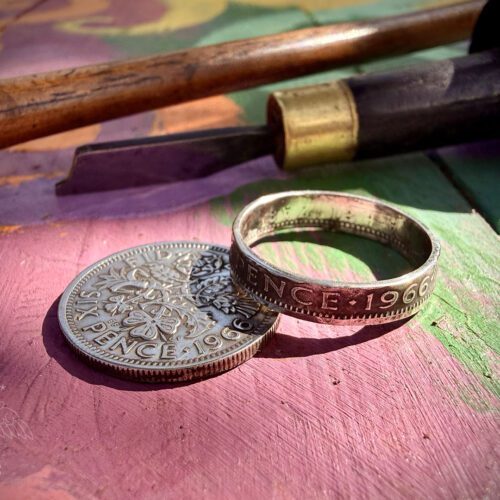
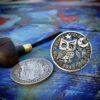
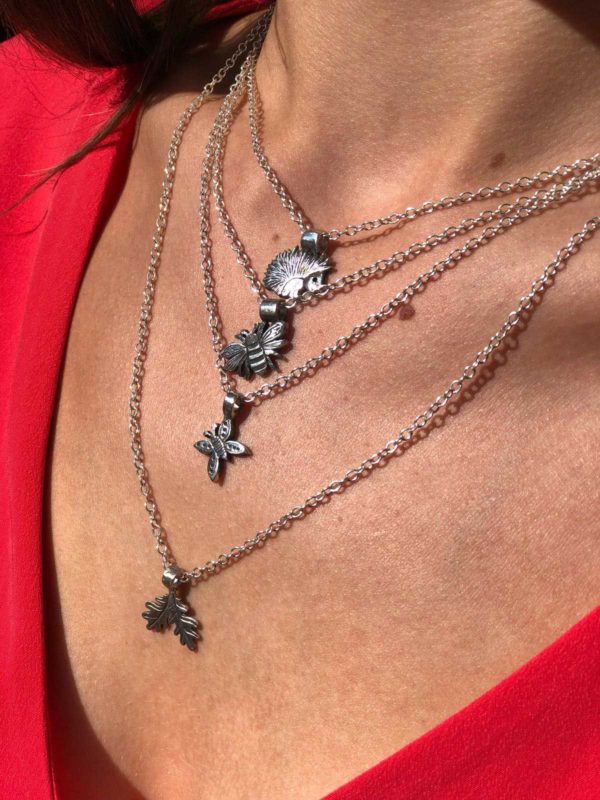
These lovely little lucky charms are a great gift for yourself or anyone you know who was born in 1946. Each one is handcrafted from a genuine 1946 sixpence. The lucky four leaf clover is hand cut with a traditional jewellers saw. The gorgeous ‘antique’ patina finish is completely natural and original. You are also welcome to choose the lucky sixpence as a keepsake lucky token to be carried in a purse or wallet. If this option is cozen the design will be created without the necklace loop so it sits flat in a pocket or purse. If you decide upon a silver chain you are also welcome to choose a little charm to hang from the hand wrought silver ‘hairy growler’ safety hook. These are also 100 % hand made and recycled from silver, bronze and copper coins.
The four-leaf clover, often called a “lucky clover,” represents luck, hop, faith and love. Its rarity adds to its allure, making it a coveted emblem of serendipity and unexpected joy. Beyond its literal form, the clover, especially the four-leaf variety, has permeated various cultural expressions, including literature and art, reinforcing its association with good fortune and positive outcomes. This ‘luckyness’ is multiplied as the sixpence coin itself is traditionally viewed as a lucky coin. Double luck.
You are also welcome to choose the lucky sixpence as a keepsake lucky token to be carried in a purse or wallet. If this option is cozen the design will be created without the necklace loop so it sits flat in a pocket or purse. Size : Approx 19 mm diameter
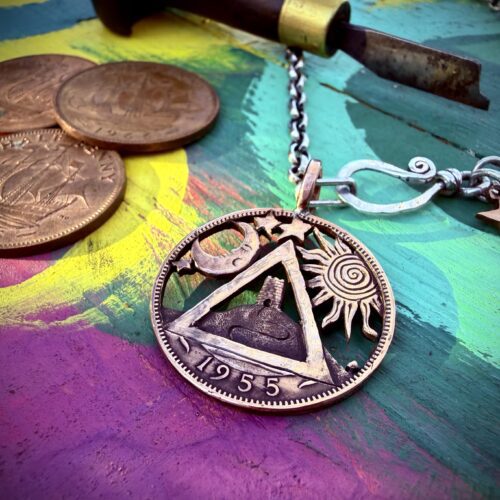
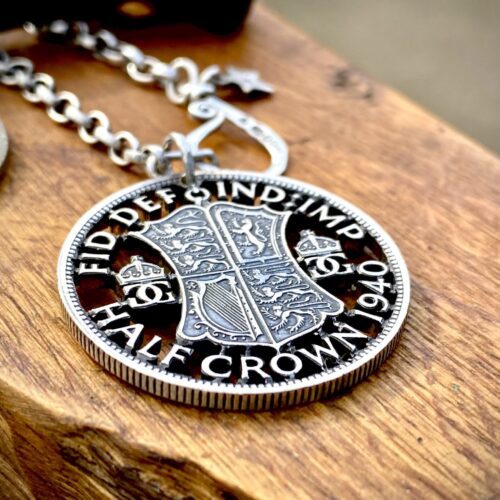
If you decide upon a silver chain you are also welcome to choose a little charm to hang from the hand wrought silver ‘hairy growler’ safety hook. These are also 100 % hand made and recycled from silver, bronze and copper coins.
The lucky sixpence tradition, where the coin is given as a symbol of good luck, has its roots in British history, particularly in wedding and Christmas traditions. Introduced in 1551 during the reign of Edward VI, the sixpence was a circulating coin for centuries. Its association with good luck is linked to various customs, including placing it in a bride’s shoe or including it in a Christmas pudding. The lucky sixpence lore has been firmly establish through many of our traditions. These traditions are part of the soul of our culture.
Origins of the Sixpence as a Lucky Charm:
Wedding Tradition:It’s common for a sixpence to be placed in a bride’s shoe to wish her good fortune. This practice is thought to have originated in the early 1600s when the Lord of the Manor presented the coin as a wedding gift, and later, it became a customary dowry gift.
Christmas Pudding Tradition:Another tradition involves placing a sixpence in the Christmas pudding before it’s cooked. The person who finds the sixpence in their portion on Christmas Day is said to have good luck for the coming year. This tradition is believed to have started during Victorian times, specifically on the Sunday before Advent, known as “Stir Up Sunday,” according to The East India Company Collections.
Fairies and the Sixpence:Some folklore suggests that fairies would reward a tidy maid or housewife by leaving a sixpence in her shoe.
The Sixpence’s History as a Coin:The sixpence was first struck in 1551, during the reign of Edward VI, and was initially a silver coin. It was a popular coin in British pre-decimal coinage for over 400 years. It was demonetized in 1980, but its legacy as a lucky charm endures.
The sixpence’s journey from a circulating coin to a symbol of good luck is a testament to its enduring presence in British culture and tradition.








Reviews
There are no reviews yet.