
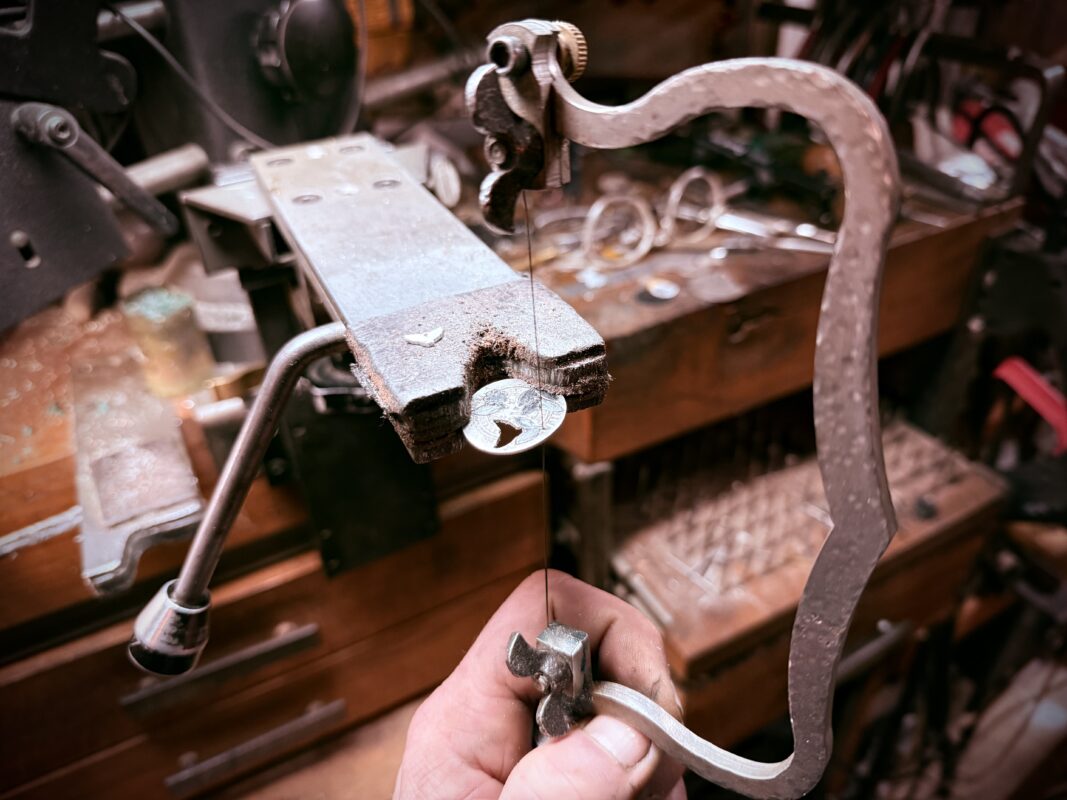
Saw‑piercing is one of the oldest and most direct ways of making silver jewellery. It is slow, deliberate, and unforgiving — and that is exactly why it produces pieces with character, subtle variation, and life.
This article explains how a saw‑pierced silver pendant is made, from the first pencil line to the finished piece, and why this traditional method remains central to the way Hairy Growler works.
What Is Saw‑Piercing?
Saw‑piercing is the process of cutting shapes from sheet metal (old sterling silver coins) using a fine jeweller’s piercing saw. The saw frame holds a thin, replaceable blade with tiny teeth, allowing intricate lines and internal details to be cut by hand.
Unlike casting or machine cutting, saw‑piercing requires constant control. Every curve, pause, and adjustment comes directly from the maker’s hand. The result is a piece that carries subtle differences — never perfectly identical, always human.
Step 1: Drawing the Design
Every pendant begins on paper.
Designs are first sketched by hand, often loosely at first, then refined through multiple drawings. Planning marks, construction lines, and notes are part of the process. These sketches explore balance, proportion, and how a form will feel when worn.
Woodland forms, folklore animals, and symbolic motifs often evolve slowly at this stage. A design is not rushed into metal until it feels settled.
Step 2: Transferring the Design to Silver
Once finalised, the drawing is transferred onto a sheet of silver. This can be done by tracing, gluing a paper template, or drawing directly onto the metal, I prefer just drawing directly and working it out from there.
Silver is chosen for its durability, warmth, and the way it responds to hand tools. The thickness of the sheet is selected carefully — too thin and the piece lacks presence, too thick and it becomes heavy and difficult to wear.
Step 3: Piercing the Silver by Hand
The silver sheet is secured on a bench pin, and the piercing saw is threaded with a fine blade.
Cutting begins slowly. The saw moves up and down while the metal is guided into the blade. Tight curves, internal cut‑outs, and fine details require patience and constant attention. Blades break frequently — replacing them is simply part of the rhythm of the work.
This stage can take hours. It is where the character of the piece truly emerges.
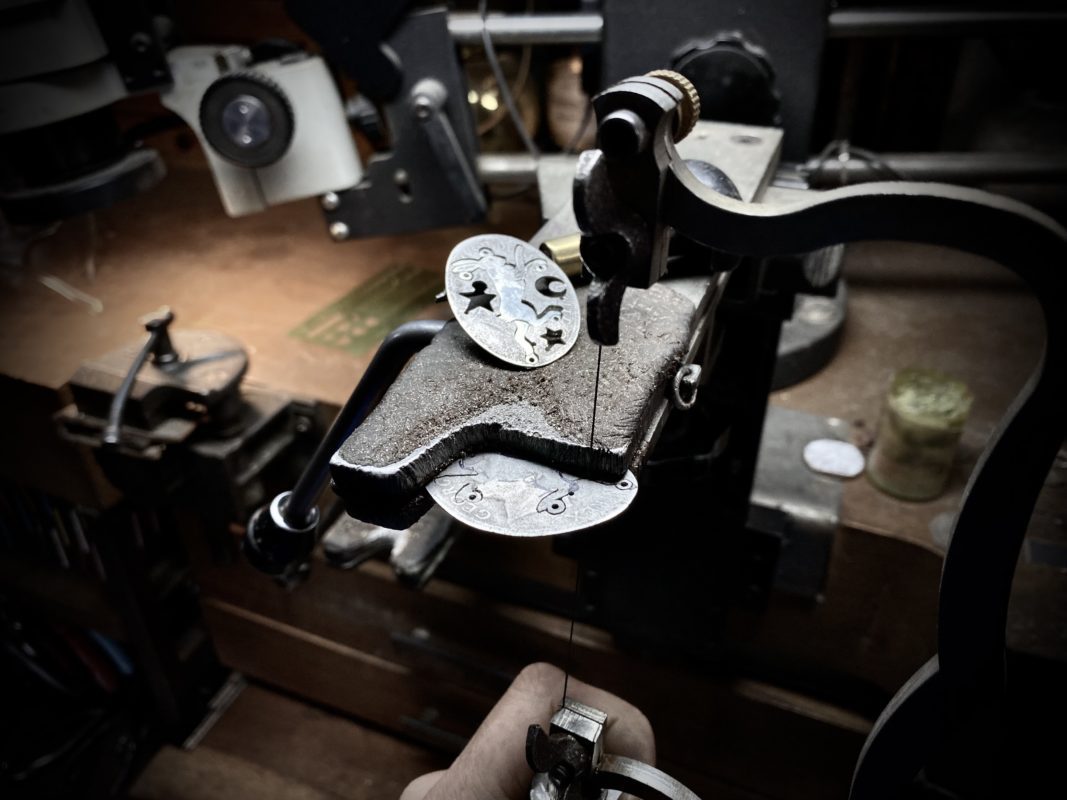
Step 4: Refining the Shape
After cutting, the raw edges are refined with needle files and abrasive papers. This stage softens lines, sharpens details, and corrects small irregularities.
Rather than erasing every mark, the aim is balance — clean, intentional edges that still retain evidence of handwork. These small traces give saw‑pierced jewellery its quiet depth.
Step 5: Forming and Assembly
Depending on the design, the silver may be gently hand engraved, formed, curved, or layered. Bails, rings, or additional elements are soldered in place using heat and silver solder.
Fire plays a crucial role here. Each heating alters the metal slightly, changing its colour and surface before it is cleaned and restored. The process demands care and timing — too much heat can undo hours of work.
Step 6: Finishing the Pendant
The final stages involve sanding, polishing, and sometimes oxidising the silver to bring out depth and contrast.
Some pieces are left with a soft, satin finish. Others are polished more brightly. The goal is never a factory‑perfect surface, but one that feels honest and tactile.
Why Saw‑Piercing Still Matters
In a world of rapid production and digital precision, saw‑piercing remains deliberately slow.
It allows forms to grow naturally, guided by eye and hand rather than software. It creates jewellery that feels grounded and individual, with small variations that reflect the time spent making it.
For Hairy Growler, saw‑piercing is not just a technique — it is a philosophy. It keeps the work connected to craft, tradition, and the quiet satisfaction of making something carefully.
Made to Be Worn
A saw‑pierced silver pendant carries more than its shape. It carries the hours of attention that went into it, the marks of tools, and the choices made along the way.
These are pieces designed to be worn often, to age naturally, and to gather their own meaning over time.
To explore jewellery made using this process, visit Our Craft & Inspiration or browse the current collections.

