Why the natural world still feels true
We live among constant revision.
Language shifts.
Symbols shift.
Fashion, values, identities, and allegiances move quickly now — so quickly that meaning itself can begin to feel unstable, as though nothing is allowed to settle before it is renamed, reimagined, or replaced.
There is freedom in change, of course.
But there can also be fatigue.
A sense that the ground beneath us is always moving.
That the world keeps asking us to redefine ourselves before we have had time to understand who we already are.
And yet outside all this, beyond the noise and reinvention, the natural world continues in its older way.
The hare still startles at the field edge.
The owl still waits in the dark.
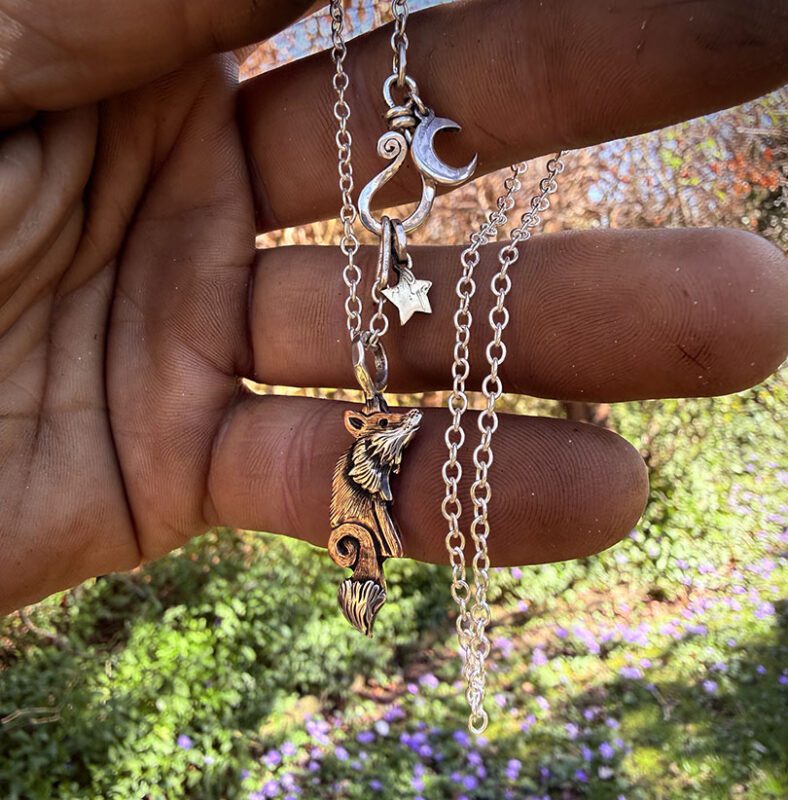
The fox still moves with intelligence through the hedge line.
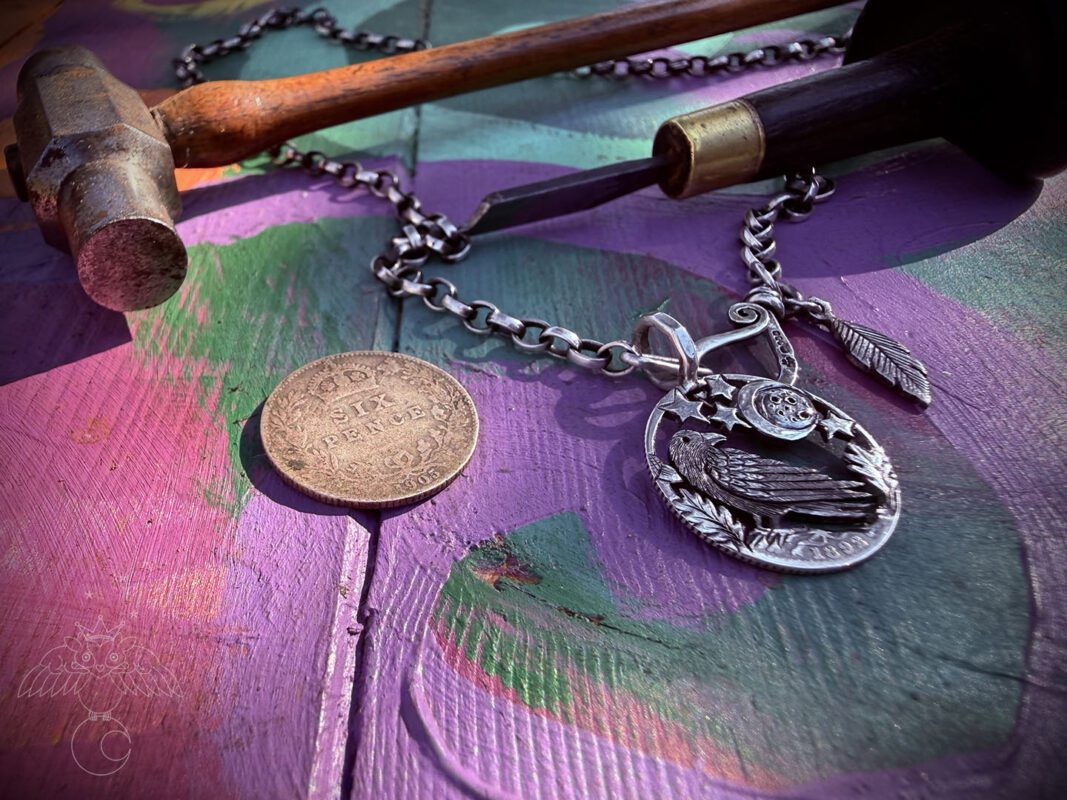
The raven still watches from the branch.
The moon still returns.
The oak still deepens its roots.
None of these things need to explain themselves.
None of them need to keep up.
That is part of why they matter so much to me.
They feel like anchors to something real.
If you’ve already read [Our Craft & Inspiration], you’ll recognise this as one of the central ideas behind Hairy Growler: old symbols still matter because they continue to tell the truth.
The World Before Performance
Modern life often feels crowded with interpretation.
Everything can become a statement.
Everything can become an image.
Everything can be pulled into performance, display, and endless revision.
But the natural world does not perform for us.
A tree does not rebrand itself.
A fox does not curate its meaning.
A bird does not announce what it symbolises before it sings.
It simply lives according to its nature.
There is a great relief in that.
When I look toward animals, woodland forms, moon cycles, and old symbols, I am not turning away from reality. I am turning toward a reality that still feels steady. A reality older than fashion and more durable than opinion.
That steadiness has become precious.
This is why so much of my work returns to [Woodland Symbolism] — not because these forms are quaint, but because they remain rooted in something deeper than trend.
Why Animal Spirits Endure
Animal spirits have lasted because they were not invented in haste.
They were observed.
Over generations, people watched how creatures moved through the world — the way the hare appears and vanishes, the way the owl waits, the way the fox survives, the way the raven lingers where memory gathers. Meaning did not arrive all at once. It settled slowly, like weather into stone.
That is why these symbols still feel alive.
The hare continues to speak of intuition, thresholds, and the strange nearness of mystery.
The owl still carries silence, patience, and knowledge that arrives in darkness.
The fox remains cleverness without arrogance — a creature of subtle movement and unseen paths.
The raven belongs to memory, to aftermath, to the wisdom of what remains.
The wolf holds an older instinct altogether — not the delicate intelligence of the fox, but the untamed voice that rises from deeper ground.
These meanings endure because they still ring true.
Not as fixed labels.
But as recognitions.
For a broader look at how these creatures appear across traditions, see [Why Folklore Animals Appear in Jewellery Across Cultures].
Recognition, Not Invention
This matters to me deeply.
Because I think many of us are tired of feeling that we must always invent ourselves from nothing.
Some parts of who we are are not invented.
They are recognised.
A person feels drawn to a hare, and something in them answers.
A raven feels right.
An owl feels familiar.
A fox feels like kin.
A tree feels like home.
This is not childish.
It is not irrational.
It is one of the oldest ways human beings have made sense of themselves in relation to the living world.
We recognise qualities in animals because we recognise something of our own nature reflected back to us — not in a sentimental way, but in a truthful one.
That truth is what gives these symbols their staying power.
This is also why handmade jewellery can carry more than decoration. A piece chosen for its symbol often becomes a form of quiet recognition — which is part of what I explored in [Why Handmade Silver Jewellery Feels Different].
The Woodland as a Place of Return
For me, woodland symbolism is not fantasy.
It is return.
Return to rhythm.
Return to season.
Return to forms of life that do not hurry to explain themselves.
The woodland holds a different order of meaning. One that is quieter, slower, and less eager to prove itself. In the woods, a leaf matters. A birdcall matters. The shape of the moon matters. A fox passing across a path can still feel like a sentence in an older language.
That is part of what I try to honour in my work.
Not by illustrating fantasy, but by listening to the symbols that still carry weight.
A hare is not simply decorative.
A moon is not simply celestial.
An oak leaf is not simply botanical.
They are old forms of knowing.
They remind us that the world still speaks in ways deeper than fashion.
You can see this especially clearly in pieces shaped around oak, leaf, and acorn forms, and in the older meanings explored in [The Meaning of Woodland Symbols in Jewellery].
Why I Return to These Symbols in Silver
When I shape old silver into animals, moons, branches, and woodland forms, I am not trying to escape the modern world.
I am trying to keep hold of something within it.
A piece of jewellery can become more than ornament when it carries a symbol that still feels true. It can become a point of orientation. A small, private reminder worn close to the body — not of what is fashionable, but of what endures.
That matters.
Because in times of movement, what we carry matters.
What we return to matters.
What helps us remember ourselves matters.
Old silver already carries time within it. When it is shaped into a hare, a fox, an owl, a raven, or a tree, it begins to hold a second kind of continuity: not only the history of the material, but the old meanings that still travel through it.
That is why these pieces feel more like talismans than accessories.
Not because they promise magic.
But because they hold recognition.
And recognition can be its own kind of shelter.
If you’d like to go deeper into the material itself, [Why Silver Has Been Used for Jewellery for Thousands of Years]sits naturally alongside this idea.
What Remains True
The world will continue to change.
It should.
It must.
But beneath those changes there are still older companions waiting for us — moonlight on a field, a bird on a branch, roots beneath soil, a fox at dusk, the dark shape of a raven against winter sky.
These are not relics.
They are not quaint survivals.
They are forms of reality that remain available to us, if we are willing to notice them.
That is why animal spirits still matter.
They remind us that not everything meaningful is unstable.
Not everything true needs reinventing.
And not every part of who we are has to be assembled out of noise.
Some things are found.
Some things are remembered.
Some things wait quietly in the natural world until we are ready to recognise them.
Carried Forward
In a shifting world, the old companions remain.
The hare.
The owl.
The fox.
The raven.
The tree.
The moon.
Not as nostalgia.
Not as escape.
But as anchors to what still feels real.