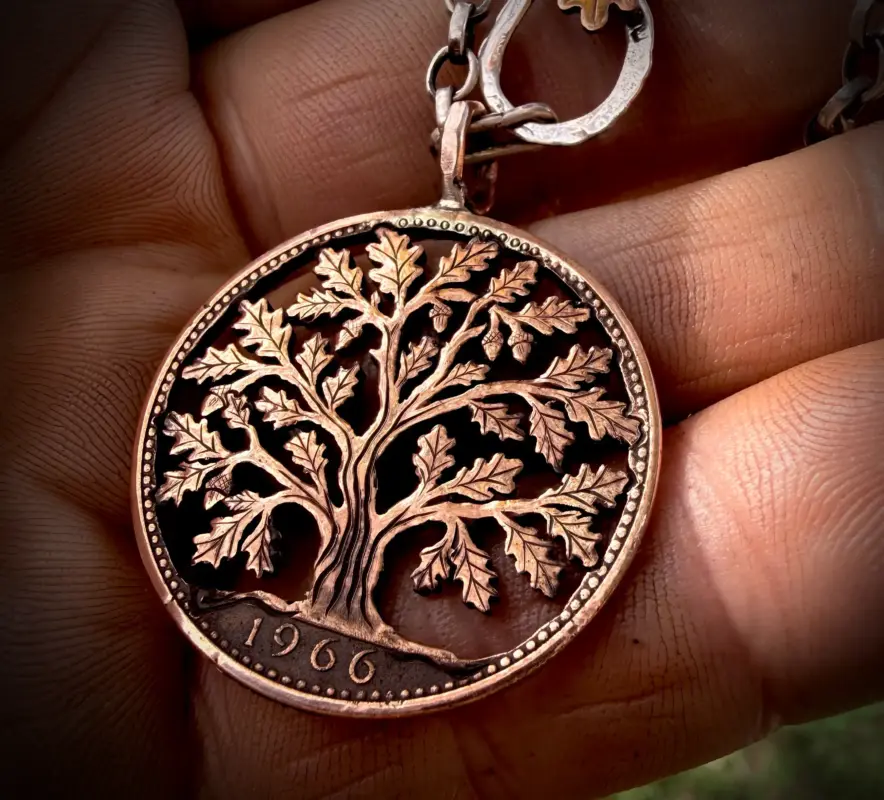
There is something rather wonderful about owning a piece of jewellery that began as an idea in somebody’s head and slowly became a real object beneath their hands.
But with so many pieces now described as handmade, handcrafted, artisan or individually created, how can you tell what has genuinely been made by a jeweller?
The simplest answer is to look beyond the label and discover how the jewellery was made, who made it, and how much of the actual making took place at the bench.
Truly handmade jewellery should have a story that can be explained. The maker should be able to describe the materials, tools, techniques and decisions involved in creating it.
And sometimes, if you look closely enough, you can see the evidence of those decisions in the silver itself.
What Does Handmade Jewellery Actually Mean?
Handmade jewellery is jewellery in which skilled human work plays a substantial part in transforming materials into the finished piece.
That can involve traditional techniques such as sawing, filing, forging, soldering, carving, engraving and stone setting. It can also involve contemporary techniques, depending on how the jeweller works.
Importantly, handmade does not always mean that every single component was created from raw metal. A jeweller might use a purchased chain, fastening, stone setting or other component while personally creating the main design.
Nor does the word handmade automatically tell you how much individual work went into a piece.
One jeweller might assemble commercially manufactured components by hand. Another might spend days designing, piercing and engraving a single piece from an old silver coin.
Both processes involve hands, but they represent very different levels of craftsmanship.
Understanding that difference is part of choosing jewellery you will treasure.
1. Can You Identify the Person Who Actually Made It?
One of the first questions I would ask when buying handmade jewellery is wonderfully simple:
Who made this?
Behind a genuinely independent jewellery workshop, there is usually a real person with an identifiable practice, a particular approach to design and a collection of skills developed over years.
Look for evidence of the maker’s work. Not simply a photograph of someone holding a hammer, but an explanation of what they actually do.
What materials do they work with?
How are their designs developed?
Which techniques do they use?
Can they explain why a particular piece looks the way it does?
A good maker will often be delighted to tell you.
2. Look for the Evidence of Traditional Craftsmanship
There are details in handmade jewellery that photographs do not always reveal.
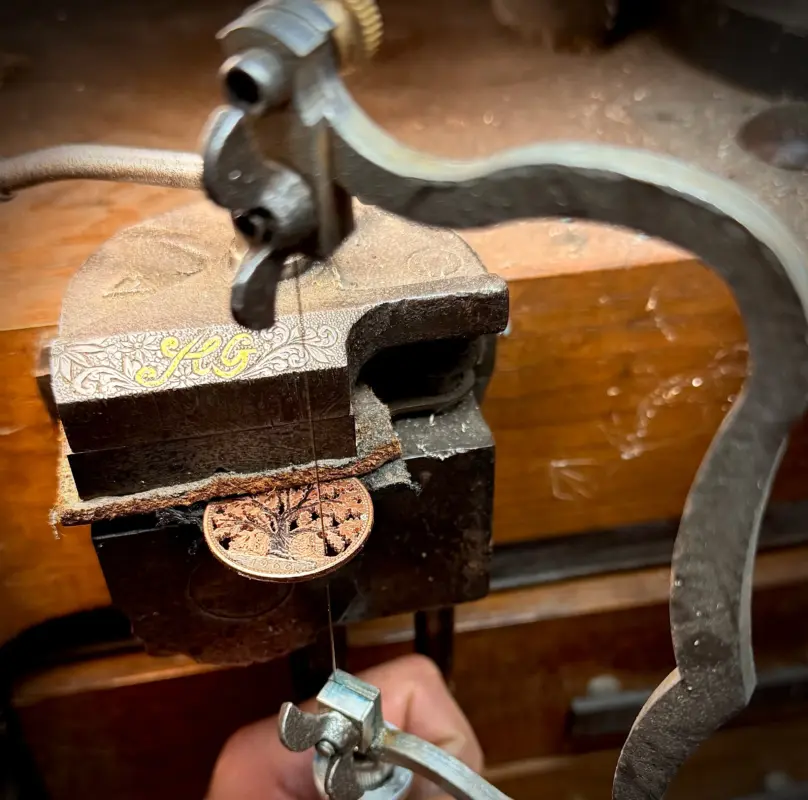
Consider a piece of silver pierced using a traditional jeweller’s saw.
A fine blade passes through the metal, following carefully drawn lines. Small openings must first be drilled so the blade can be threaded through the silver.
The maker then guides the saw around the design, removing tiny areas of metal until the intended shape begins to emerge.
Every change of direction requires attention.
Every narrow connection of silver must be strong enough to survive the making process and everyday wear.
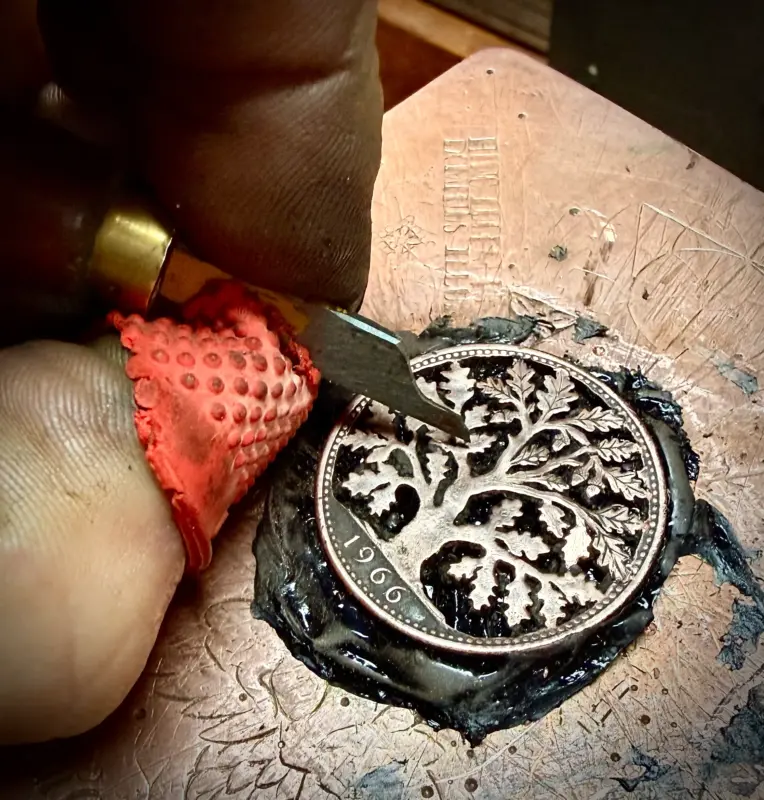
After piercing, the work may be filed, carved, textured and engraved.
These details become particularly fascinating when working on a very small scale.
Imagine carving the feathers of a bird into a silver coin barely larger than a thumbnail.
Or cutting the branches of a tree so that light can pass between its leaves.
Much of the character comes from the thousands of tiny decisions made along the way.
3. Are Small Differences a Sign of Handmade Jewellery?
Sometimes, yes.
When jewellery is individually worked by hand, slight differences may appear between one piece and another.
A leaf might curl a little differently. An engraved line may catch the light at another angle. A bird’s feathers may have subtle variations in their texture.
These are not necessarily imperfections.
They can be evidence of individual craftsmanship.
However, variation alone does not prove that jewellery is handmade. Manufactured pieces can also vary, and skilled handmade jewellery can achieve remarkably consistent results.
The important distinction is between careless workmanship and the individual character of something carefully made.
Good handmade jewellery should still have well-finished edges, secure connections, appropriate strength and thoughtful construction.
Character is lovely. Poor craftsmanship is not.
4. Ask Where the Materials Came From
Materials can tell us almost as much about a piece of jewellery as the design itself.
Some jewellers begin with newly manufactured sheet silver, wire or commercially prepared components.
Others work with materials that have already lived a previous life.
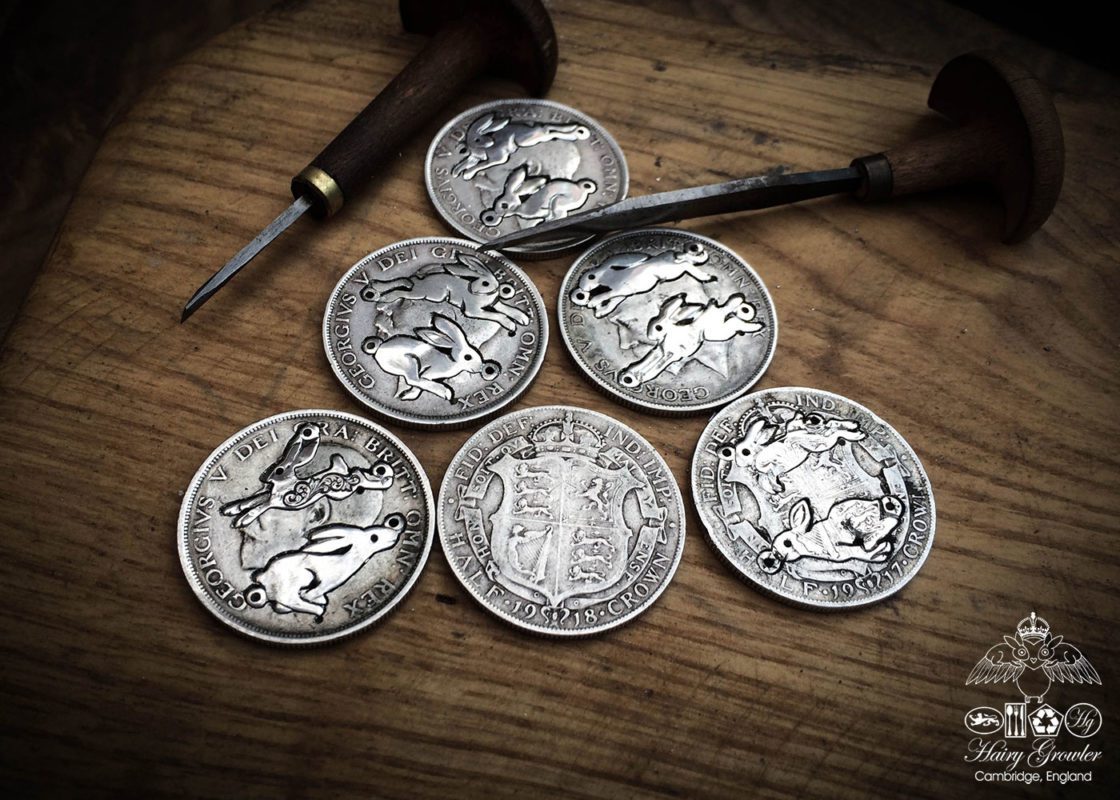
At my Hairy Growler workshop in Cambridge, I have a particular affection for old British coins and antique silverware.
A Victorian silver shilling, an old sixpence, a half crown or a forgotten silver spoon can become the starting point for an entirely new piece of jewellery.
These objects arrive with their own histories.
The coins have been carried in pockets, passed across counters and handled by people whose names we will never know.
The silverware may have spent decades on a family dining table.
Rather than treating all those marks of age as something to erase, I enjoy finding ways to make them part of the finished design.
Old silver has character before the first line is drawn
5. How Can Old British Coins Become Jewellery?
This is where my own work becomes particularly interesting.
Imagine an old British silver shilling resting on a jeweller’s bench.
It is a little worn. Its date might still be visible. Its original design may have softened through decades of circulation.
To most people, it is an old coin.
To me, it might contain a hare beneath the moon, a curious fox, an owl amongst the branches or a little woodland scene waiting to be discovered.
I begin with a drawing.
The design must fit the available silver, respect the strength of the material and leave enough space for the smallest details to be worked.
Then comes the piercing saw.
Piece by piece, unwanted silver is removed.
The remaining surfaces can be carved, engraved and carefully finished.
Where the design allows, parts of the original coin remain visible, preserving evidence of its first life.
The result is not simply a decoration placed onto an old coin.
The original material has been transformed into something entirely different.
Something that was once ordinary money becomes a tiny, wearable work of art.
For an example of this approach, explore my Lucky Sixpence Solstice, individually worked from an old silver sixpence.
6. Does Handmade Jewellery Have to Be Expensive?
Not necessarily, although the price of genuinely handmade jewellery often reflects more than the cost of the metal.
There is the time spent developing the design.
The specialist tools and materials.
The years of practice required to work confidently at a miniature scale.
There are also the less visible parts of jewellery making: preparing the silver, refining the design, carefully finishing edges, polishing, checking connections and making sure the piece is comfortable to wear.
Intricate hand piercing and engraving can require considerable concentration.
Once a mistake is made in a delicate area, there may be very little opportunity to put the removed silver back.
But a higher price does not automatically mean better craftsmanship, just as a lower price does not prove that something is mass-produced.
The useful question is whether the price makes sense in relation to the design, materials, construction, skill and work involved.
7. Can Handmade Jewellery Be Made Using Modern Technology?
Absolutely.
Modern jewellery making includes computer-aided design, laser technology, precision machining and various methods of casting.
These can be valuable tools in the hands of skilled designers and jewellers.
A piece created using modern technology can still involve substantial hand finishing, setting, assembly and craftsmanship.
What matters is understanding the process.
Personally, I have chosen a rather traditional way of working.
I enjoy hand drawing designs, using a fine piercing saw, carving details and engraving directly into old silver.
There is an immediate relationship between the material, the tools and the maker’s hands.
It is a slower approach, particularly for intricate pieces.
But I happen to like slow.
Some things are worth taking your time over.
8. How Can You Recognise Quality in Handmade Silver Jewellery?
Whether you are buying jewellery online or looking at a piece in person, there are several practical details worth considering.
- Design: Does the piece feel thoughtfully composed, with pleasing proportions and a clear artistic identity?
- Finishing: Are exposed edges smooth and comfortable against the skin?
- Construction: Are connections, fittings, clasps and other components suitable for their intended use?
- Materials: Does the maker explain what the jewellery is made from and distinguish sterling silver from other silver alloys or finishes?
- Provenance: Can the maker explain where the materials originated and how they were transformed?
- Detail: Do the engraved lines, pierced openings and other decorative elements show careful workmanship?
- Care: Does the jeweller provide sensible guidance about wearing, cleaning and maintaining the piece?
A trustworthy jeweller should describe the material accurately.
9. Is Handmade Jewellery a Better Gift?
That depends on the person receiving it.
But handmade jewellery offers something especially appealing when a gift is intended to carry meaning.
It can reflect someone’s love of nature, connection with a particular place, fascination with history or affection for a particular animal.
An old coin can also connect a piece to a significant year, perhaps the year someone was born or a special anniversary.
And the knowledge that a real person has spent time creating the piece can become part of the gift itself.
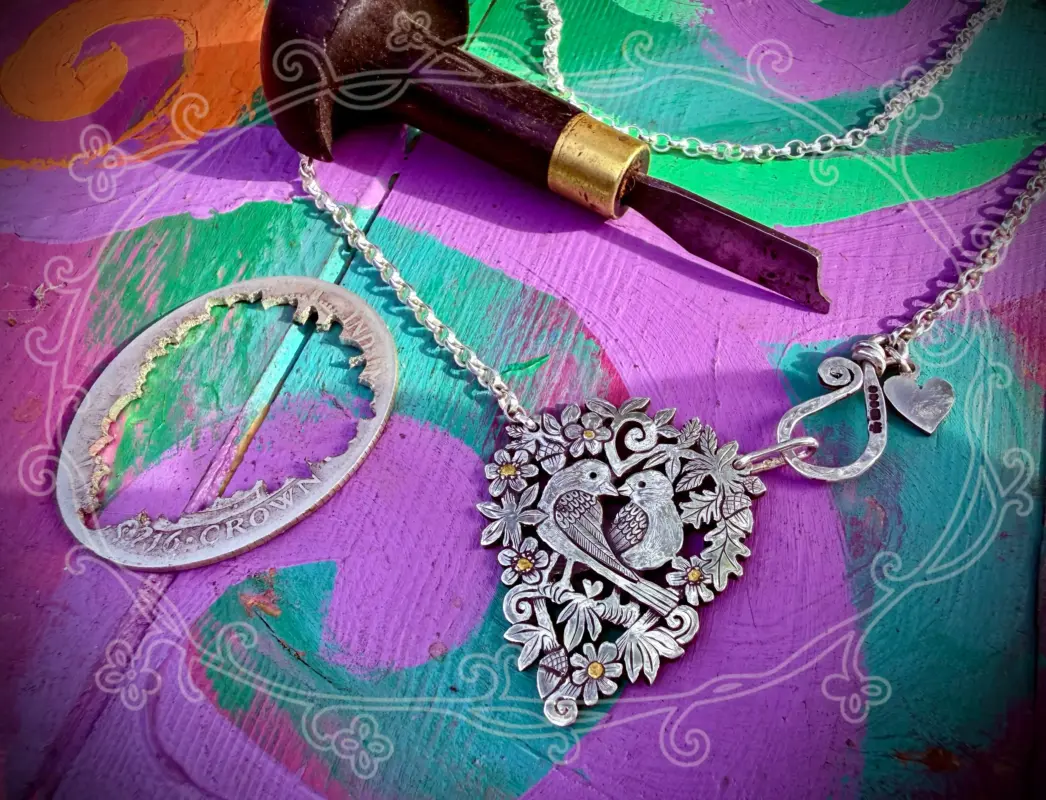
Consider The Lovebirds of Old Silver, an intricate woodland composition created from old British silver.
Its two birds, shared branch and tiny details tell a story about companionship and affection.
That story may matter far more to the person receiving it than the weight of the silver.
Jewellery becomes especially personal when the design says something that words sometimes struggle to express.
10. Can Handmade Jewellery Become an Heirloom?
Of course it can.
But an heirloom is not defined by its price alone.
It becomes an heirloom because somebody values it enough to keep it, care for it and eventually pass it on.
Sometimes the most treasured object in a family is not the most expensive.
It is the one with the story.
A necklace worn on a wedding day.
A little silver hare given to mark a new beginning.
A pendant made from a coin bearing a meaningful date.
Something carried through the years until its significance becomes inseparable from the person who wore it.
I find that particularly moving when working with old silver.
The material already has a past.
My job is to give it another life.
What happens after that belongs to the person who wears it.
Frequently Asked Questions About Handmade Jewellery
How can I tell whether jewellery is genuinely handmade?
Look for information about the individual maker, their tools and techniques, the origin of the materials and the construction of the finished piece. Real workshop photographs and detailed explanations can provide useful evidence. Small variations may offer clues, but do not prove handmade origin on their own.
Is handmade jewellery better quality than mass-produced jewellery?
Not automatically. Quality depends on design, materials, workmanship and construction. Skilled independent jewellers can produce exceptional pieces, but the word handmade is not a guarantee of quality by itself.
Is handmade silver jewellery more valuable?
Handmade silver jewellery may carry additional value because of the craftsmanship, originality, time and artistic skill involved. Its monetary value also depends on the material, condition, maker and market demand. Personal and sentimental value are separate considerations.
Is recycled silver suitable for jewellery?
Yes. Reclaimed silver can make excellent jewellery when its composition is understood and it is worked appropriately. Historic British coins were produced using different silver standards, so their metal content should be identified accurately rather than assuming every silver coin is sterling silver.
Can jewellery made from old coins be worn every day?
Many pieces can be suitable for regular wear, depending on their construction, design and fittings. Particularly delicate or intricate pieces may benefit from more careful handling. The maker should be able to advise on the intended use and care of each design.
Where can I find genuinely handmade jewellery in the UK?
Independent jewellers, established craft studios and specialist makers are good places to begin. Look for clear information about who makes the jewellery and how it is produced. At Hairy Growler Jewellery, I design and individually handcraft jewellery from old British coins and antique silverware in Cambridge, using traditional jewellery-making techniques.
A Final Thought from the Bench
I have spent a great deal of time looking at old coins.
Some are almost too worn to read. Others still have beautifully crisp dates, portraits and little details that have survived for more than a century.
Occasionally, a coin seems to suggest its own design.
A curved line becomes the back of a hare.
A tiny patch of silver becomes the moon.
A few carefully placed openings turn an ordinary circle of metal into a woodland scene.
There is a lovely moment during the making when the original object starts to disappear and the new one begins to emerge.
That is the moment I enjoy most.
It is why I still love working with traditional tools.
And it is why the question of whether jewellery is genuinely handmade matters to me.
Behind the finished piece should be something worth discovering.
A process.
A person.
A little imagination.
And perhaps, if we are lucky, a story that continues long after the tools have been put away.
Les aka Harry Growler
Hairy Growler Jewellery
Individually handcrafted from old British coins and antique silverware in Cambridge, England.
Discover More from Hairy Growler
If you enjoy jewellery with a story, you might like to explore these pieces from my workshop:
- Lucky Sixpence Solstice: traditional hand piercing and engraving using an old British silver sixpence.
- The Lovebirds of Old Silver: an intricate Signature piece celebrating love, companionship and the history of old silver.
- Jenny Wren x Lucky Sixpence: a little piece of British coin history transformed into a meaningful keepsake.
Each piece begins with a material that has already lived a life, and a new idea waiting to be discovered.
To learn more about what inspires the work I create grab a brew and head to : Jewellery rooted in myth, folklore and nature.