A little more detail…
Dragonfly necklace – handmade and recycled silver Sixpence
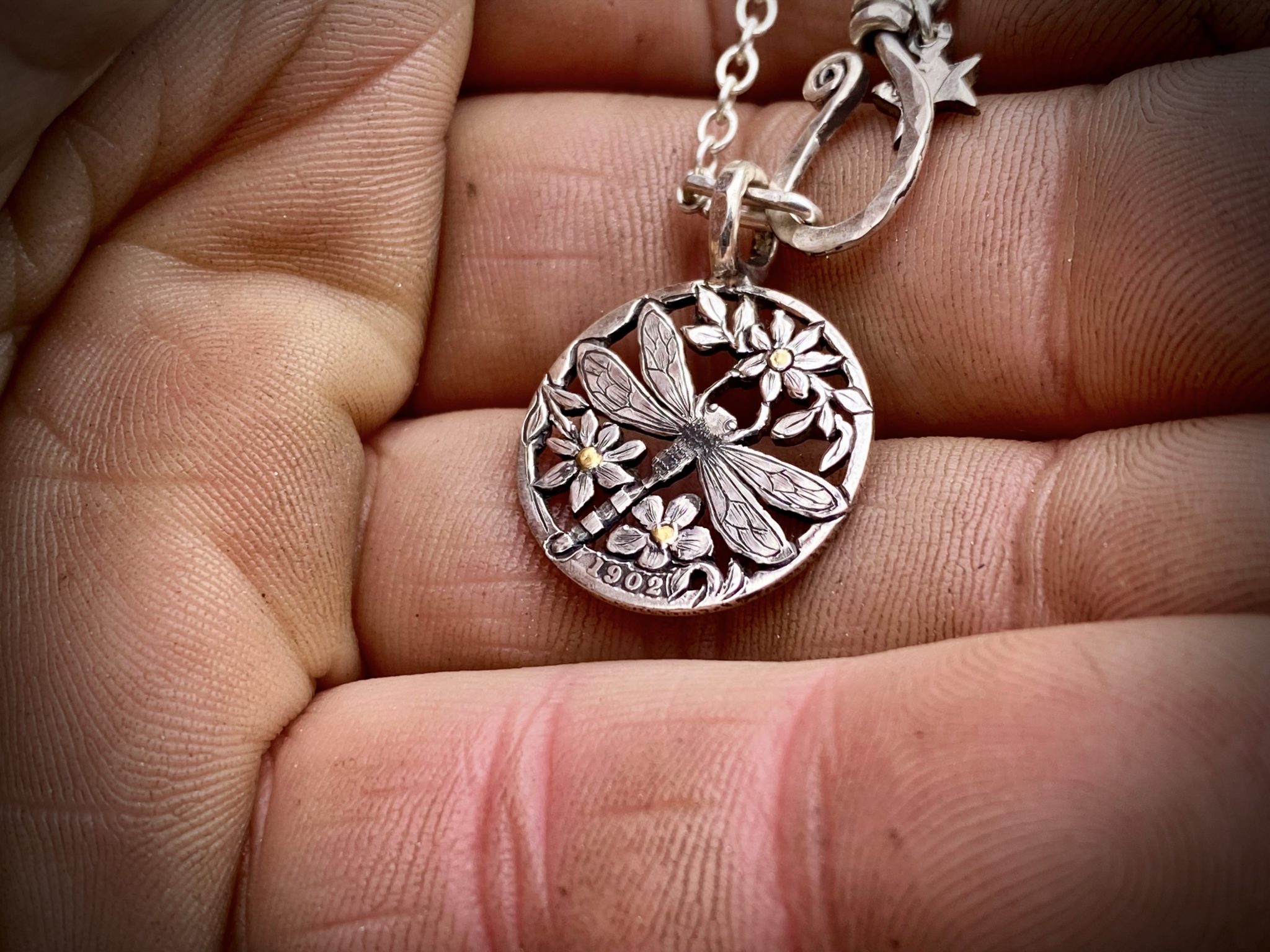
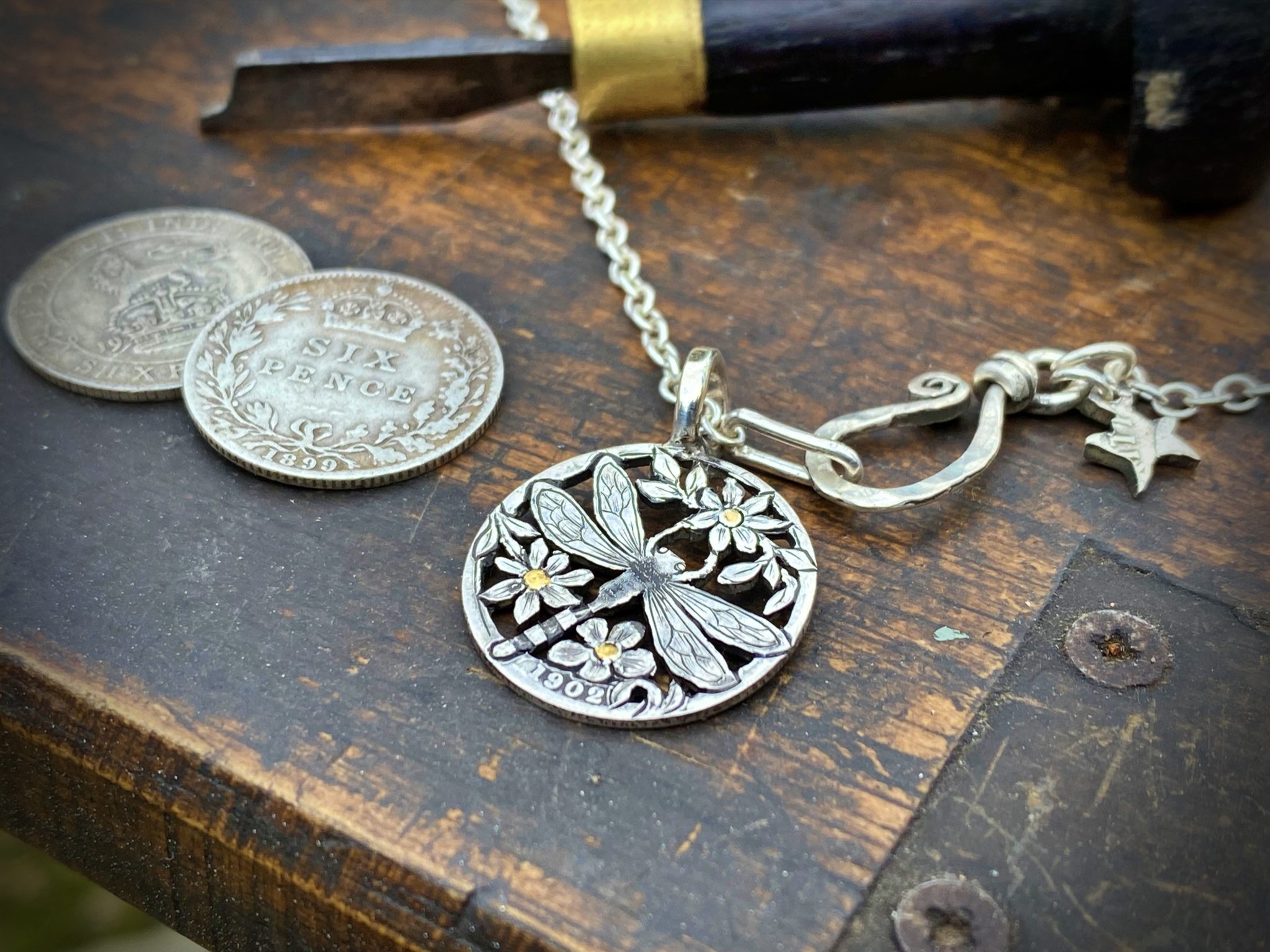
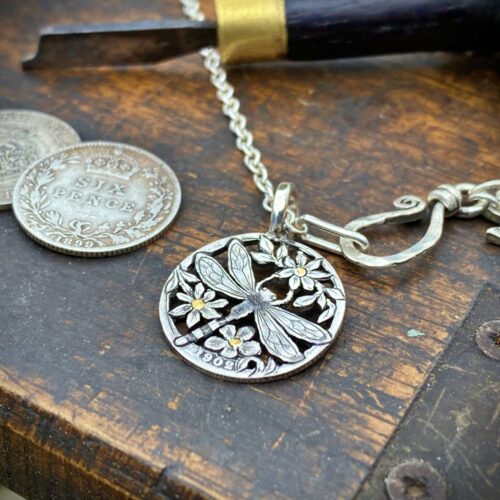
The dragonfly, in almost every part of the world symbolizes change and change in the perspective of self realization; and the kind of change that has its source in mental and emotional maturity and the understanding of the deeper meaning of life. It is this which inspired me to create this pendant which has been lovingly and meticulously hand cut from a recycled 100 year old silver sixpence.
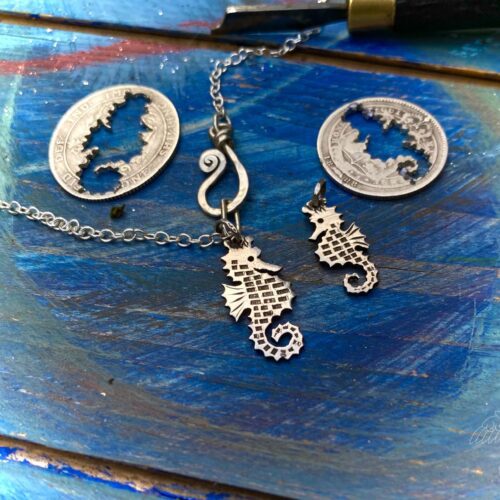
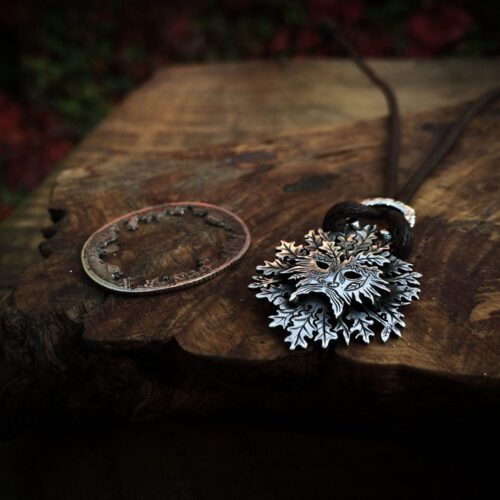
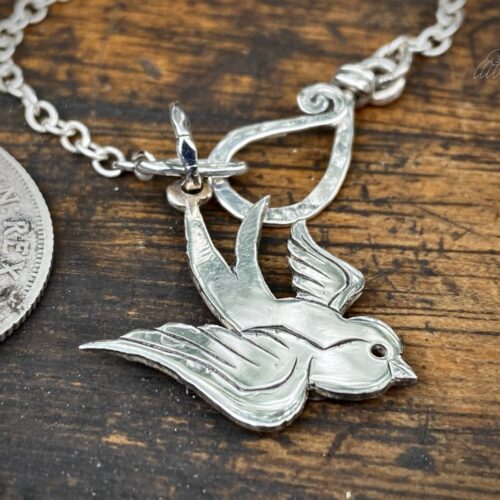
Each pendant is carefully handcrafted to order, using only these recycled silver coins. The coins themselves are the perfect medium for this beautiful design, inline with a love of nature using these coins is the perfect ethical and green solution. No new silver is destructively ‘mined’ and old, uncollectible pure silver coins are saved from the ‘melting pot’ of bullion merchants so some of their history and story live on.
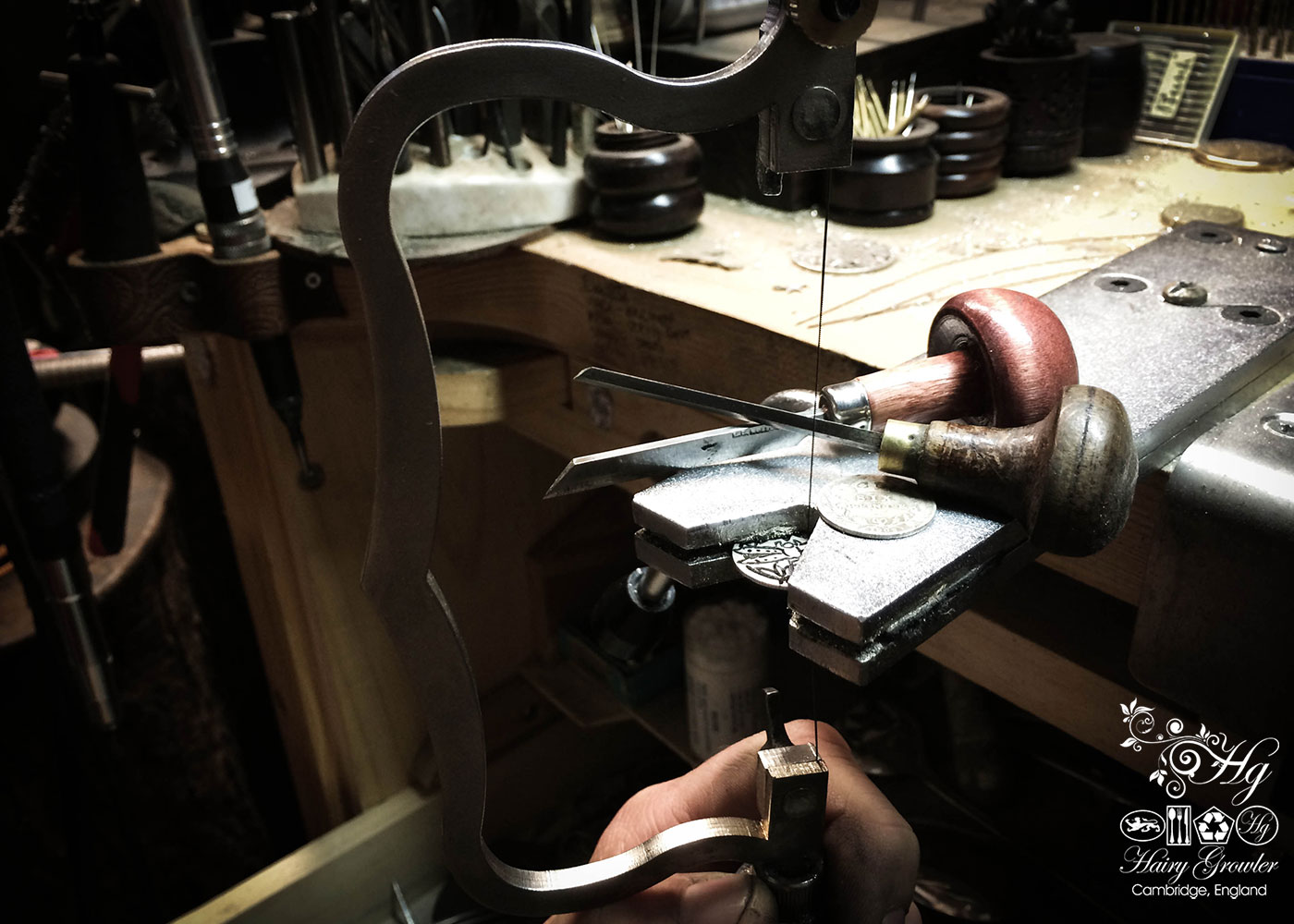
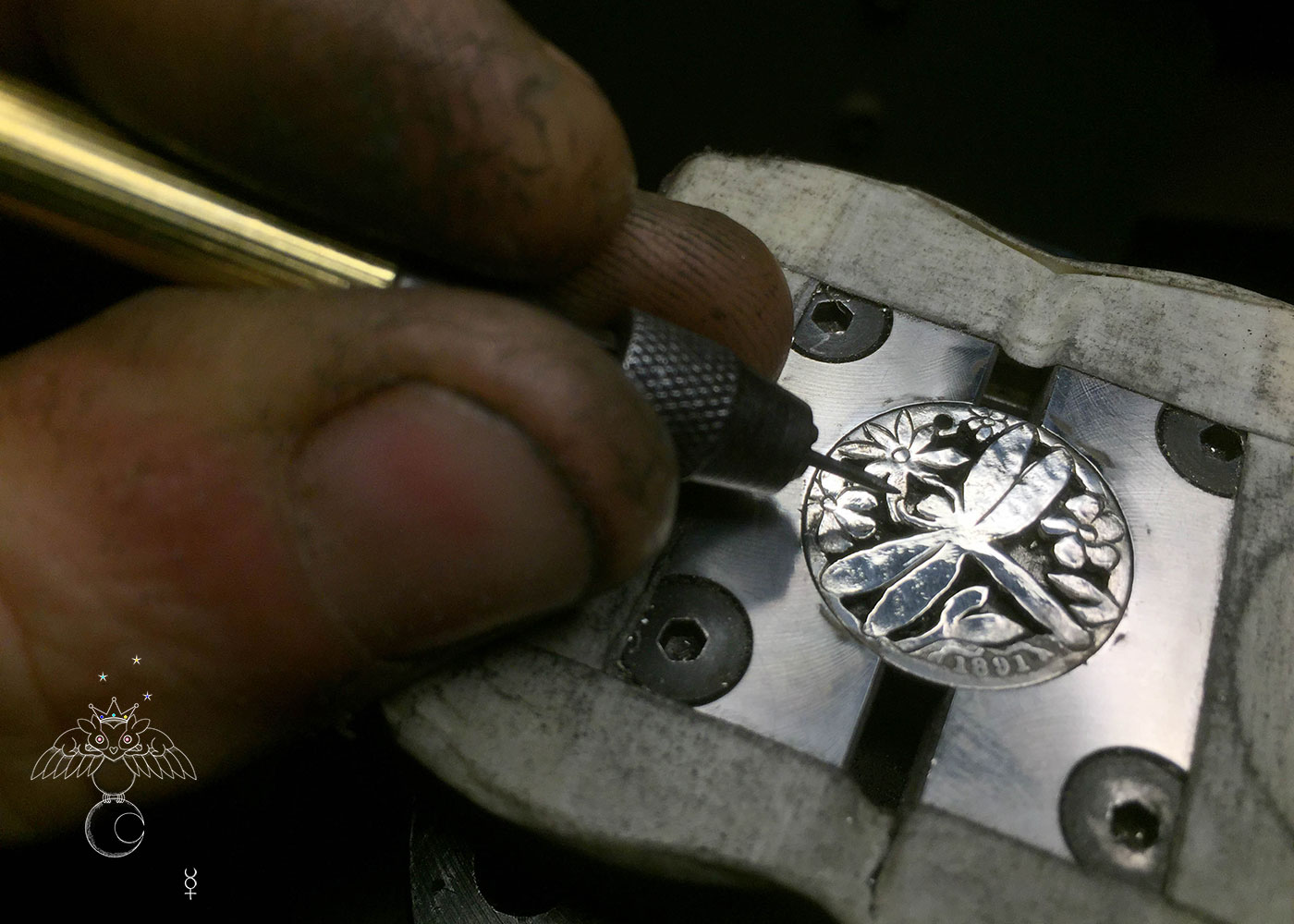
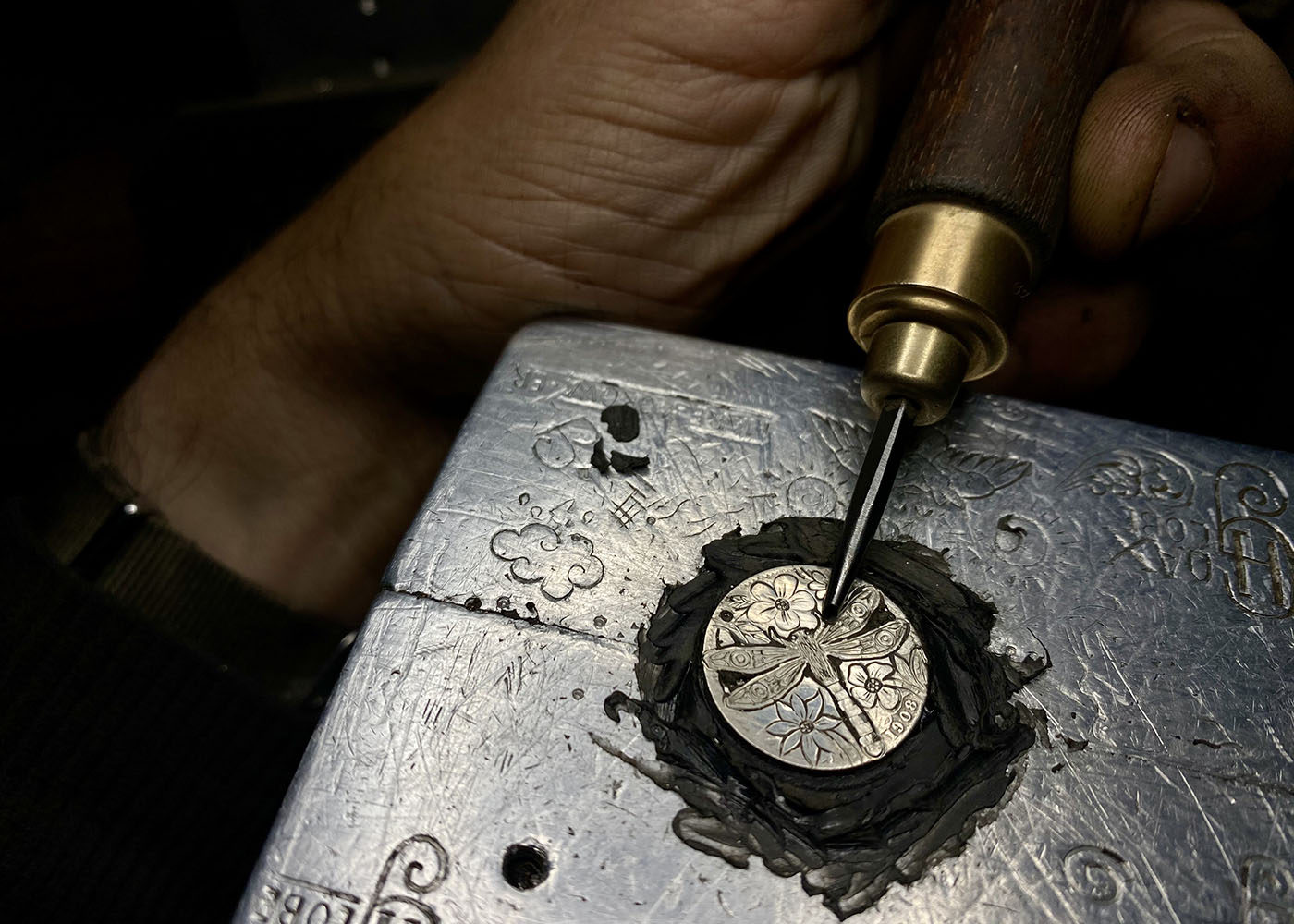
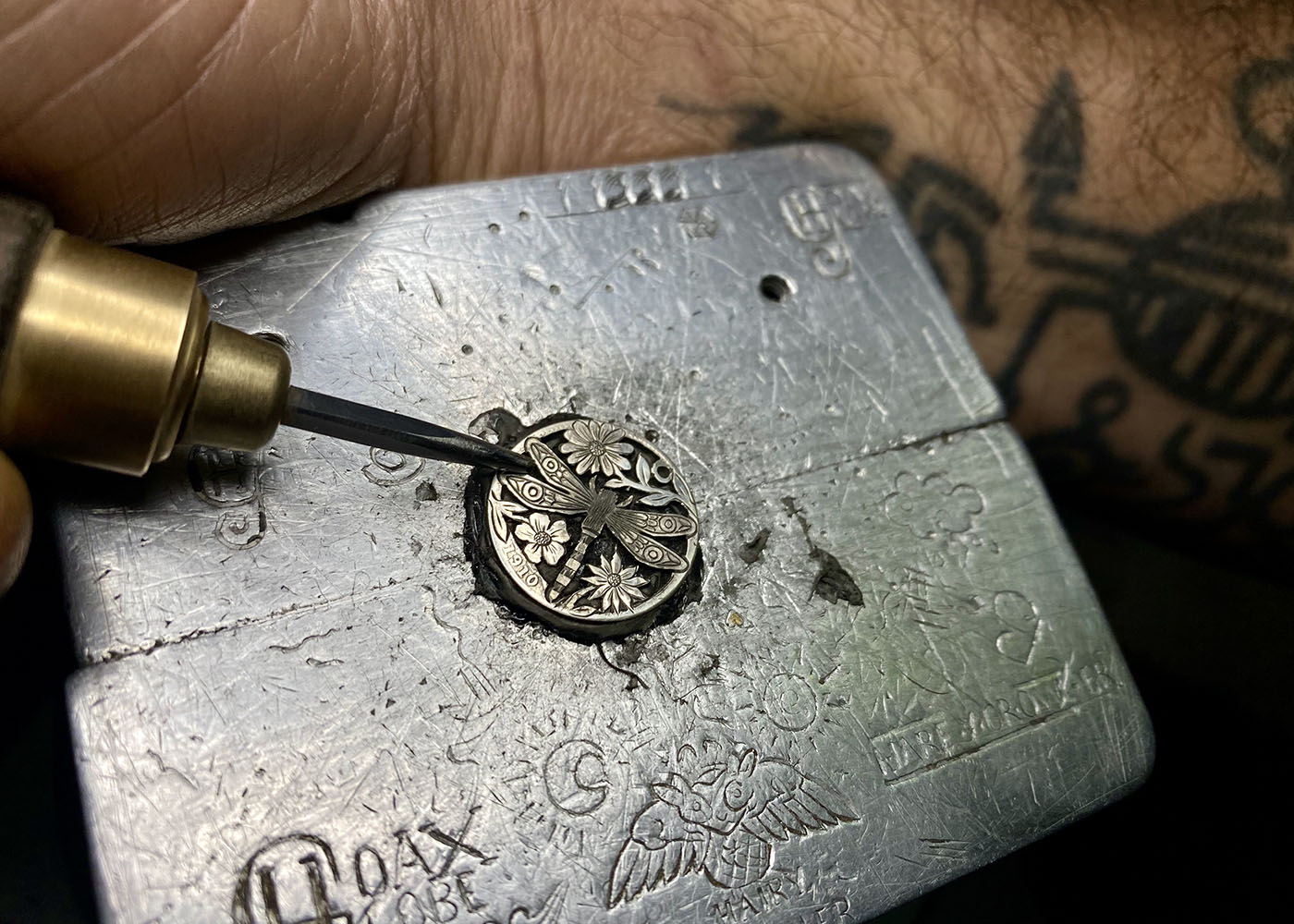
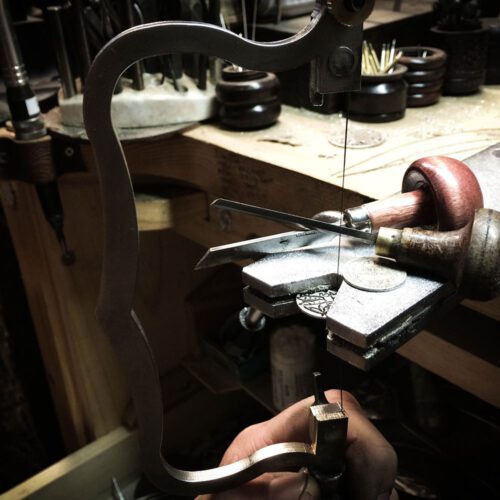
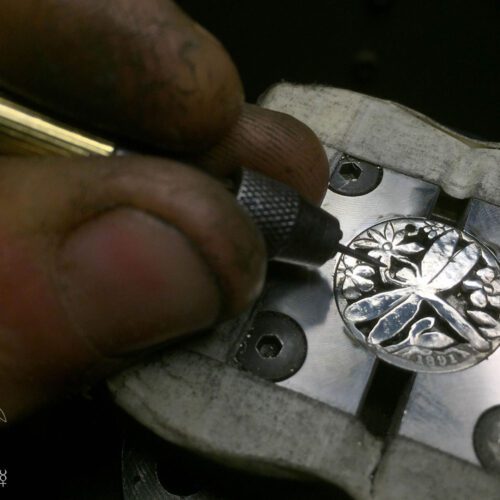
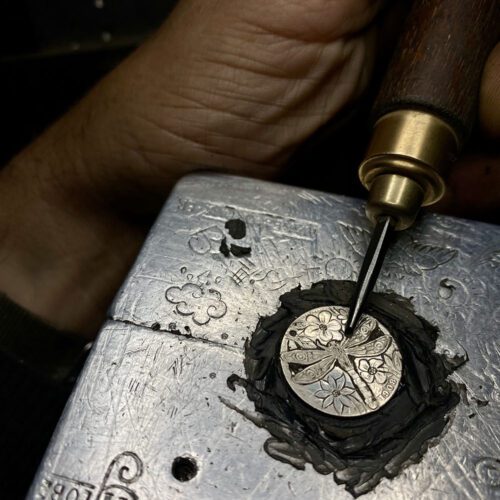
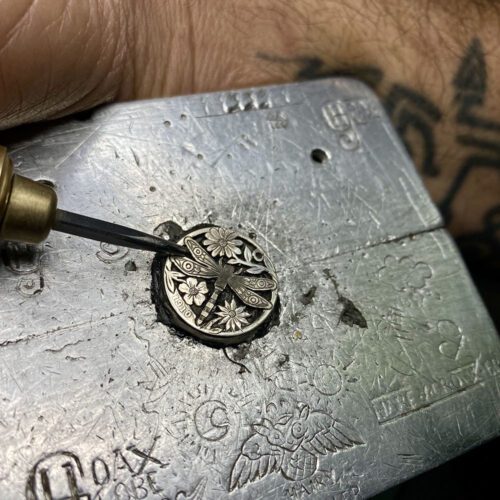
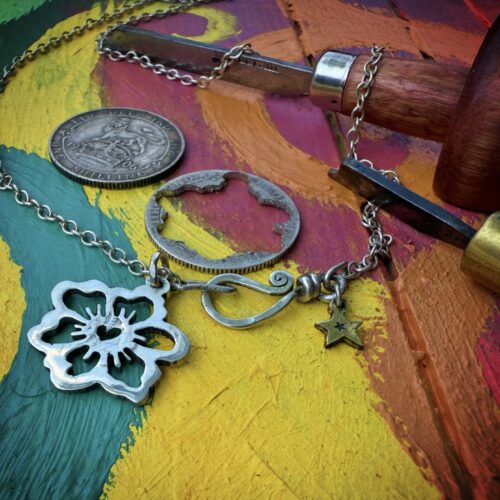
Once the design has been freehand sketched on to the coin it is carefully hand cut and carved using traditional hand saws, chisels and files. The stamens of the flowers are delicately inlaid with 24ct gold. These accents contrast beautifully with the silver. This traditional process allows me to have a close connection to each piece, ensuring the end result is personal and unique. Handmade and recycled in Cambridge, England.
Dragonflies, in poetry and symbolism, represent transformation, adaptability, and new beginnings. Their life cycle, transitioning from aquatic larvae to winged adults, embodies change and self-realization. They also symbolize wisdom, insight, and communication with the elements. Furthermore, dragonflies can represent courage, happiness, and even the presence of loved ones who have passed on.
Dragonflies are iconic symbols of transformation due to their metamorphosis from water-bound larvae to aerial adults. This makes them powerful metaphors for personal growth, change, and embracing new stages of life. The distinct phases of a dragonfly’s life, each marking a new chapter, make them symbols of new opportunities and accepting change.
Dragonflies are often associated with wisdom and insight, potentially stemming from their ability to navigate both water and air. Their ability to thrive in diverse environments, both in water and air, symbolizes adaptability and resilience.
In some cultures, dragonflies represent the passage from life to death, and even the presence of loved ones who have passed on, offering comfort and a sense of connection to the spiritual realm
The Lucky sixpence itself…
Each pendant is carefully handcrafted to order, using only these recycled sterling silver sixpence coins. The coins themselves are the perfect medium for this beautiful design, inline with a love of nature using these coins is the perfect ethical and green solution. No new silver is destructively ‘mined’, rather, old, uncollectible coins are saved from the ‘melting pot’ so some of their history and story live on.
The lucky sixpence tradition, where the coin is given as a symbol of good luck, has its roots in British history, particularly in wedding and Christmas traditions. Introduced in 1551 during the reign of Edward VI, the sixpence was a circulating coin for centuries. Its association with good luck is linked to various customs, including placing it in a bride’s shoe or including it in a Christmas pudding. The lucky sixpence lore has been firmly establish through many of our traditions. These traditions are part of the soul of our culture.
Origins of the Sixpence as a Lucky Charm:
Wedding Tradition:It’s common for a sixpence to be placed in a bride’s shoe to wish her good fortune. This practice is thought to have originated in the early 1600s when the Lord of the Manor presented the coin as a wedding gift, and later, it became a customary dowry gift.
Christmas Pudding Tradition:Another tradition involves placing a sixpence in the Christmas pudding before it’s cooked. The person who finds the sixpence in their portion on Christmas Day is said to have good luck for the coming year. This tradition is believed to have started during Victorian times, specifically on the Sunday before Advent, known as “Stir Up Sunday,” according to The East India Company Collections.
Fairies and the Sixpence:Some folklore suggests that fairies would reward a tidy maid or housewife by leaving a sixpence in her shoe.
The Sixpence’s History as a Coin:The sixpence was first struck in 1551, during the reign of Edward VI, and was initially a silver coin. It was a popular coin in British pre-decimal coinage for over 400 years. It was demonetized in 1980, but its legacy as a lucky charm endures.
The sixpence’s journey from a circulating coin to a symbol of good luck is a testament to its enduring presence in British culture and tradition.
Once the wee Glasto design has been freehand sketched on to the coin it is carefully hand cut and carved using traditional hand saws, chisels and files. This traditional process allows me to have a close connection to each piece, ensuring the end result is personal and unique.
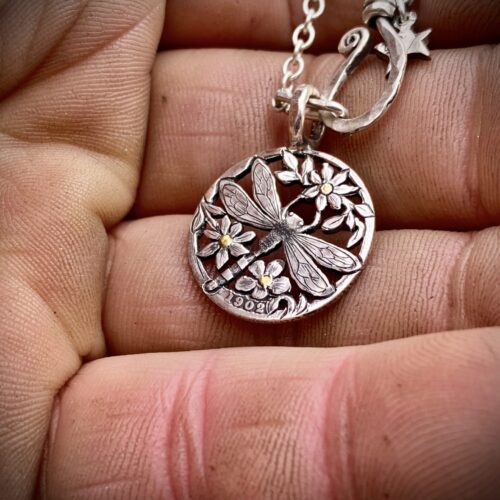
Size : Approx 19 mm diameter.





Pauline –
Beautiful dragonfly with great details.
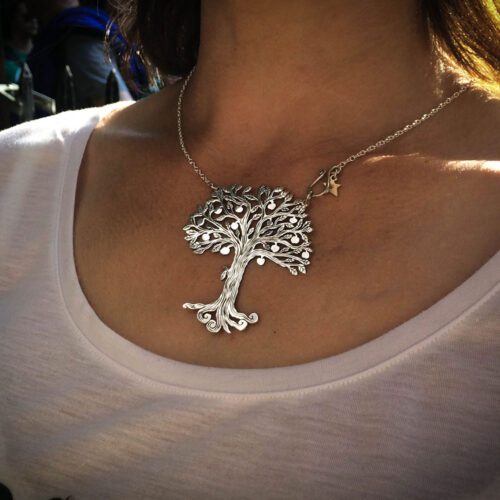
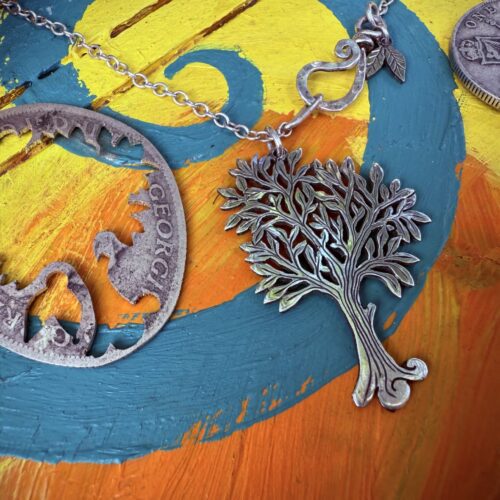
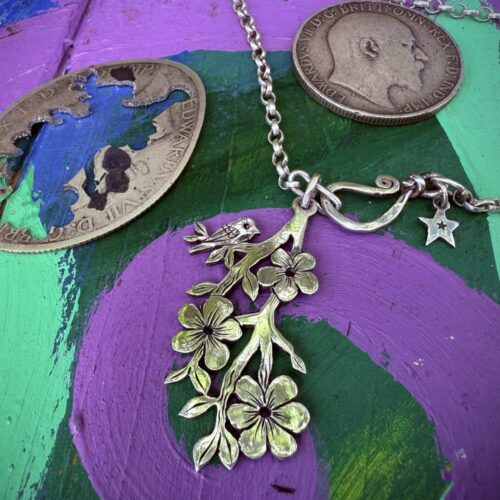
Again the attention to detail is evident and dragonflies are such a popular image that this is a winner right away. I like the flowers and leaves on the pendant also the star on the chain. The sixpence was a part of my life growing up and I like to see one turned into something beautiful.