A little more detail…
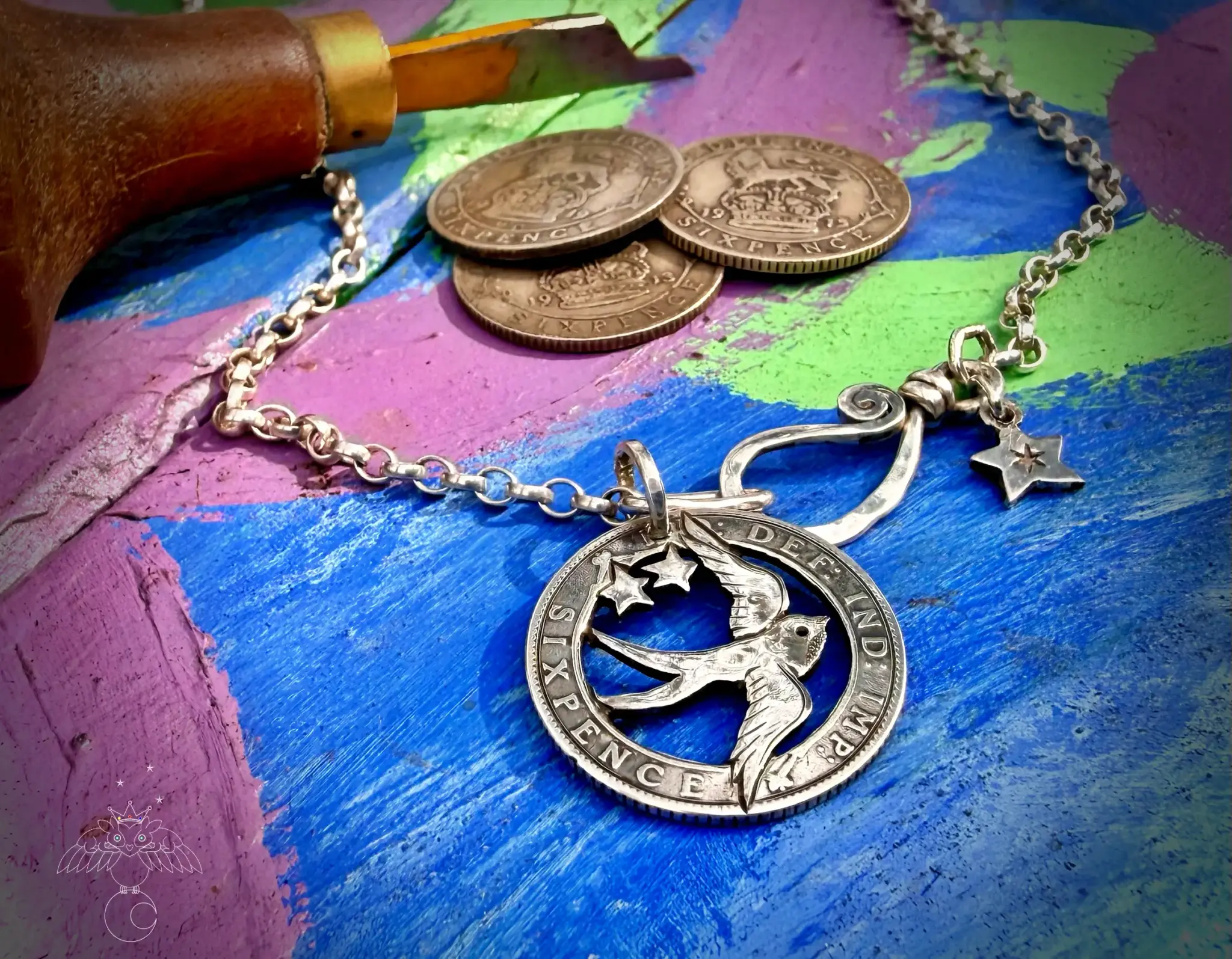
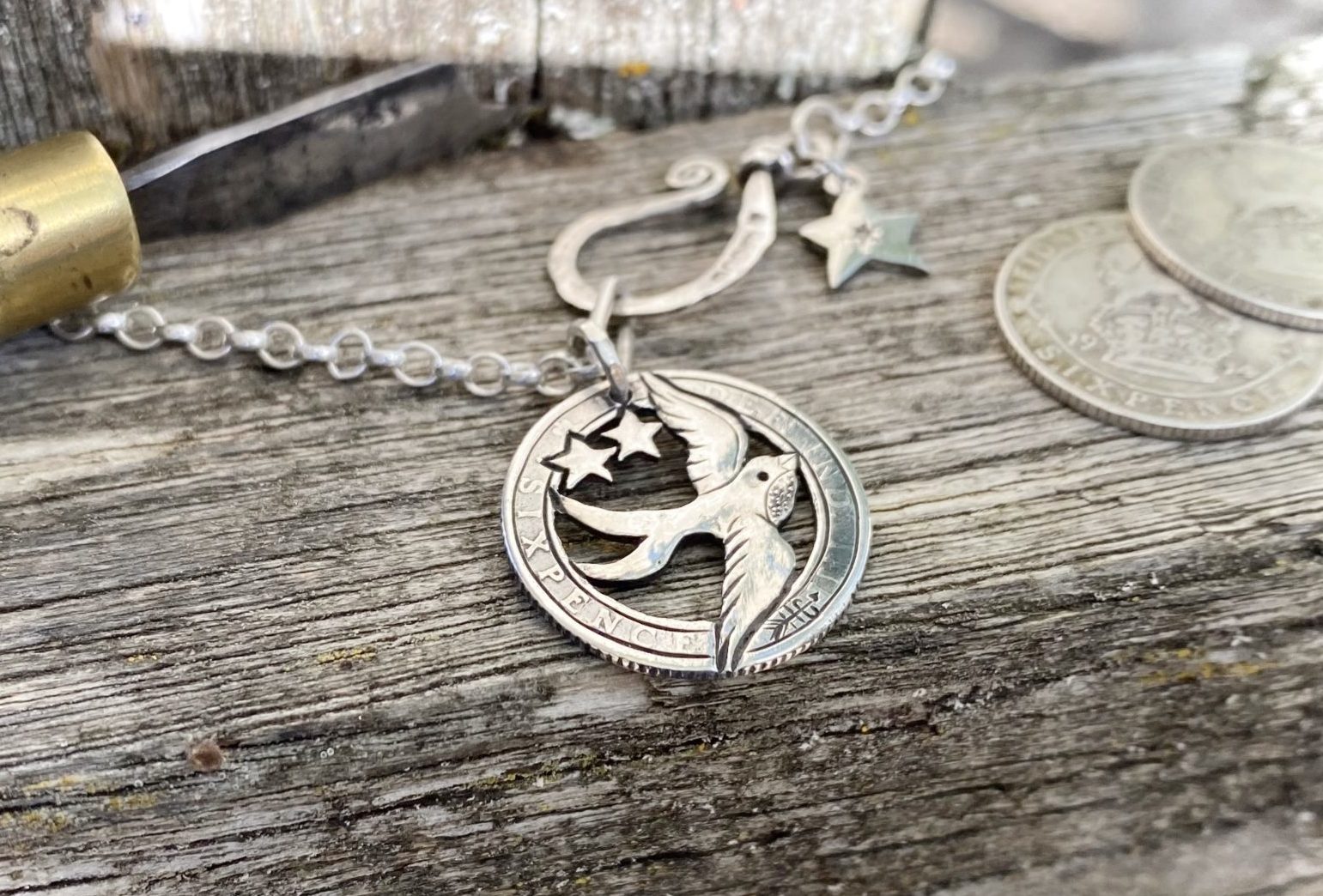
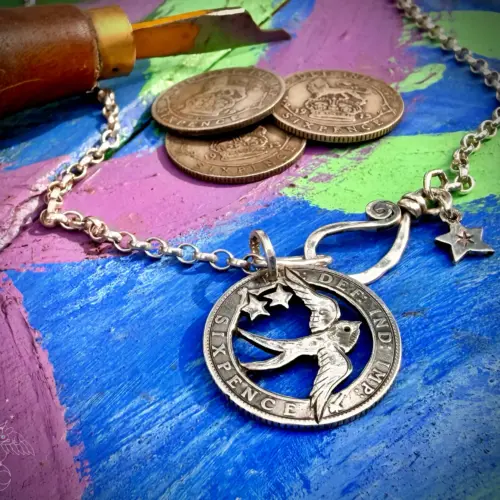
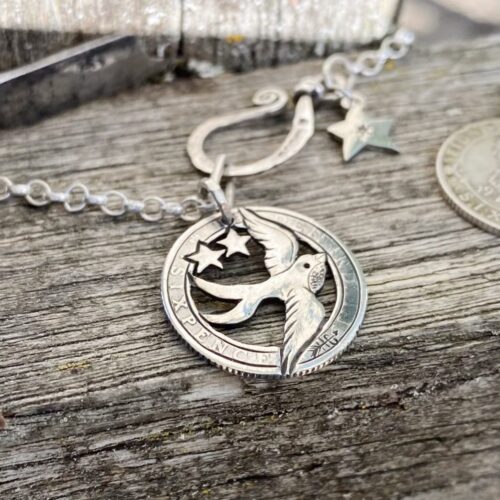
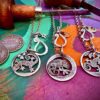
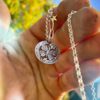
Swallow necklace pendant handmade and recycled silver coins
This solid silver lucky sixpence swallow measures approx 19mm diameter . It is a lovely delicate yet sturdy everyday wearable silver swallow which perfectly represents a sense of freedom, love and good luck. Perhaps the grandmother or grandfather who you have always loved and admired or your partner, the loving pillar in your life, or your best bud. Whichever, the shroom looks absolutely perfect on when worn on a necklace or bracelet
The swallow’s rich history and presence in diverse cultures have solidified its place as a cherished and versatile symbol in poetry, evoking a range of emotions and experiences. This is matched with wonderful cultural implications and meaning attached to the lucky silver sixpence. The combo of swallow and sixpence is powerful and beautiful.
Hope and Renewal: Swallows are migratory birds, and their return each spring signifies the end of winter and the arrival of a warmer, more vibrant season. This makes them a powerful symbol of hope, new beginnings, and renewal after difficult times.
Freedom and Adaptability: The swallow’s ability to navigate the vast distances of migration and adapt to shifting winds embodies freedom and resilience in the face of life’s challenges. Poets can use this aspect to explore themes of wanderlust and the human longing for escape.
Love, Loyalty, and Fidelity: Swallows are known to mate for life and return to the same nesting spots year after year. This behavior translates into poetic symbolism representing enduring love, loyalty, and fidelity in relationships and family bonds. In Portuguese culture, for instance, the swallow represents family, love, and fidelity.
Travel and Homecoming: The swallow’s long journeys and eventual return to its home base can symbolize both physical and spiritual voyages. It can be a poignant reminder of the importance of roots and finding solace in the warmth of home and loved ones after experiencing adventures or overcoming challenges.
Good Luck and Good Tidings: Swallows have been widely regarded as good omens in many cultures, associated with happiness, prosperity, and the arrival of good fortune.
Charles Sangster’s “The Swallows” features a conversation between the speaker and a swallow, exploring the speaker’s yearning for freedom and the end of winter’s hardships. In Elizabeth Barrett Browning’s “Paraphrase on Anacreon: Ode to the Swallow” uses the swallow as a metaphor for love, depicting it as an unshakeable force that takes root and multiplies within the speaker’s heart, bringing both joy and sorrow.
Emily Dickinson’s “Hope is the thing with feathers” uses a bird, which some connect to the swallow, as an extended metaphor for the enduring nature of hope.
The sixpence itself…
Each pendant is carefully handcrafted to order, using only these recycled sterling silver sixpence coins. The coins themselves are the perfect medium for this beautiful design, inline with a love of nature using these coins is the perfect ethical and green solution. No new silver is destructively ‘mined’, rather, old, uncollectible coins are saved from the ‘melting pot’ so some of their history and story live on.
The lucky sixpence tradition, where the coin is given as a symbol of good luck, has its roots in British history, particularly in wedding and Christmas traditions. Introduced in 1551 during the reign of Edward VI, the sixpence was a circulating coin for centuries. Its association with good luck is linked to various customs, including placing it in a bride’s shoe or including it in a Christmas pudding. The lucky sixpence lore has been firmly establish through many of our traditions. These traditions are part of the soul of our culture.
Origins of the Sixpence as a Lucky Charm:
Wedding Tradition:It’s common for a sixpence to be placed in a bride’s shoe to wish her good fortune. This practice is thought to have originated in the early 1600s when the Lord of the Manor presented the coin as a wedding gift, and later, it became a customary dowry gift.
Christmas Pudding Tradition:Another tradition involves placing a sixpence in the Christmas pudding before it’s cooked. The person who finds the sixpence in their portion on Christmas Day is said to have good luck for the coming year. This tradition is believed to have started during Victorian times, specifically on the Sunday before Advent, known as “Stir Up Sunday,” according to The East India Company Collections.
Fairies and the Sixpence:Some folklore suggests that fairies would reward a tidy maid or housewife by leaving a sixpence in her shoe.
The Sixpence’s History as a Coin:The sixpence was first struck in 1551, during the reign of Edward VI, and was initially a silver coin. It was a popular coin in British pre-decimal coinage for over 400 years. It was demonetized in 1980, but its legacy as a lucky charm endures.
The sixpence’s journey from a circulating coin to a symbol of good luck is a testament to its enduring presence in British culture and tradition.
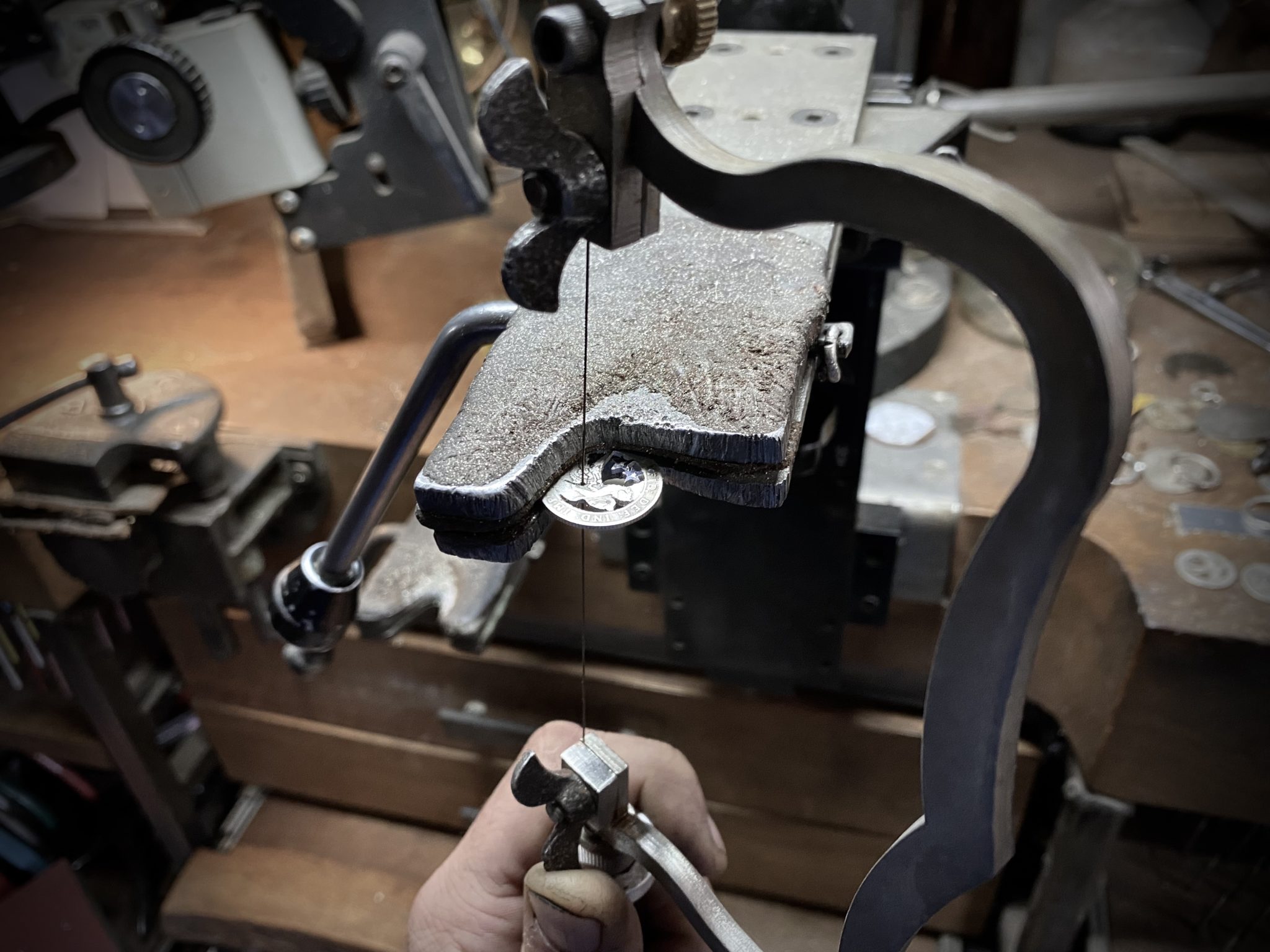
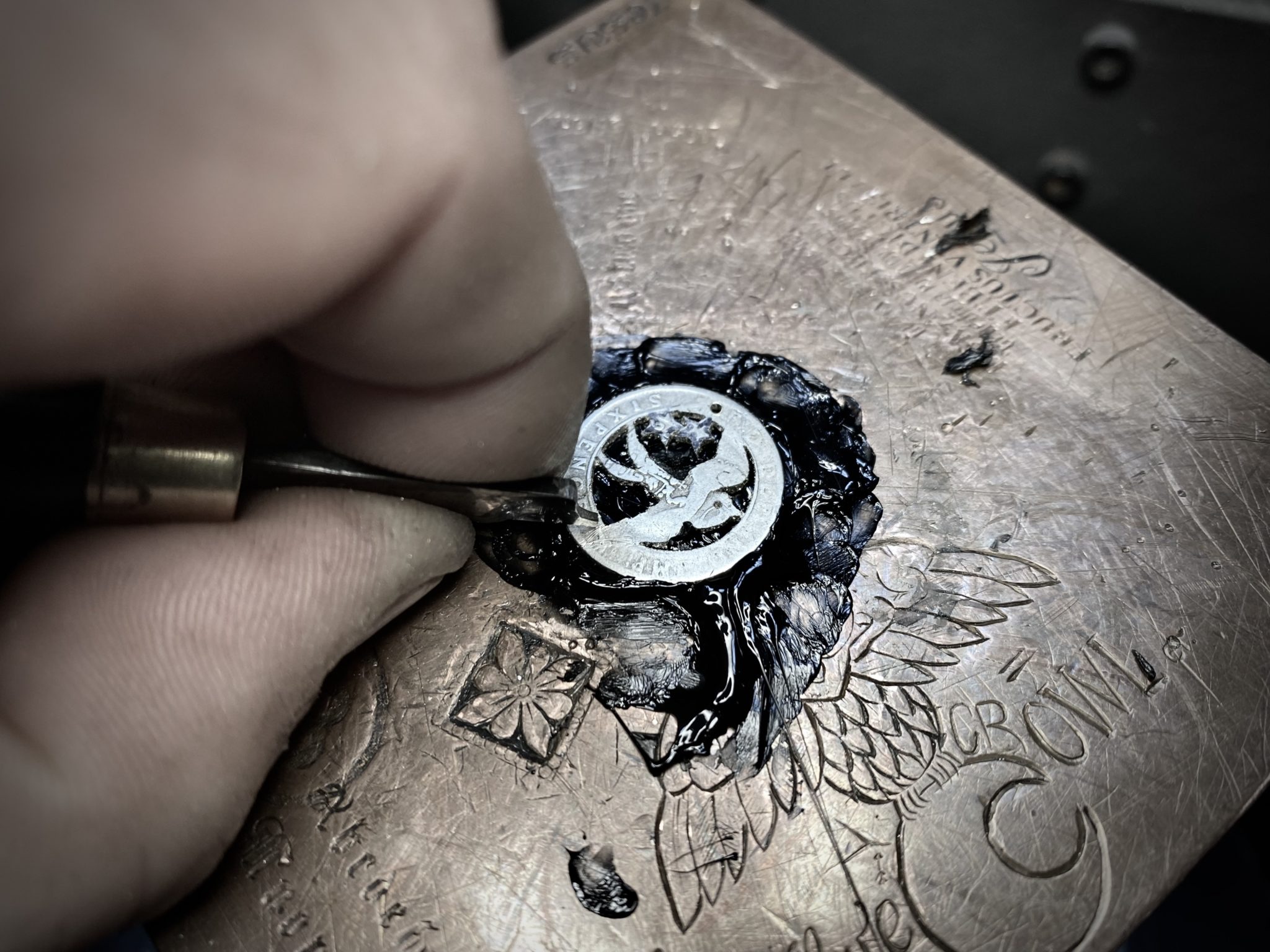
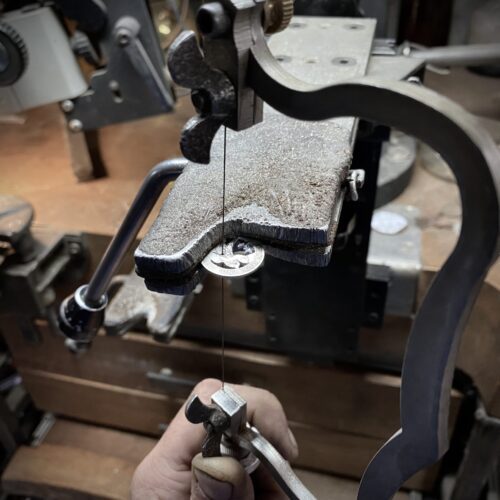
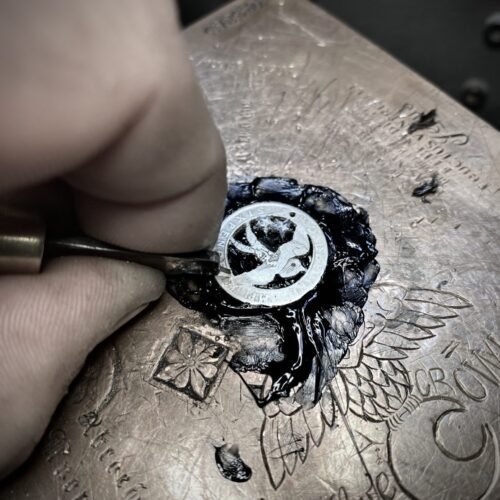
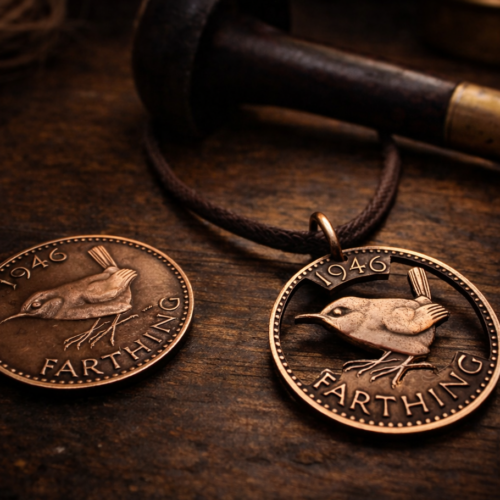
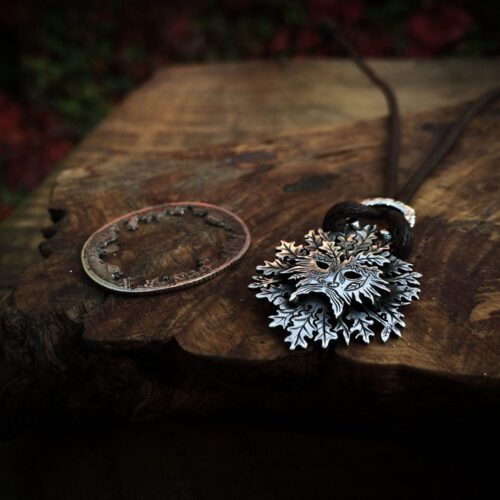
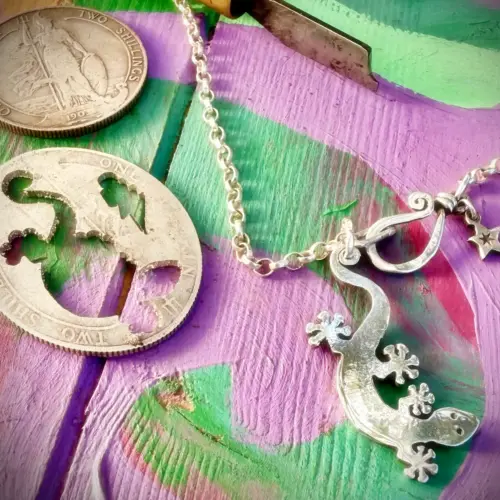
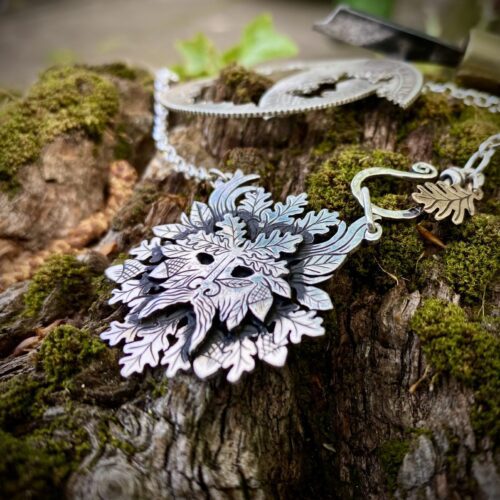
Once the wee hedgehog design has been freehand sketched on to the coin it is carefully hand cut and carved using traditional hand saws, chisels and files. This traditional process allows me to have a close connection to each piece, ensuring the end result is personal and unique.





Michael –
Sixpence charming
This is a charming piece of jewellery simple idea finished brilliantly great looking piece with 50’s charm suitable for everyone.
Nicki B –
Gorgeous piece – even more lovely in the flesh!
Was torn between this and the skull sixpence so left it to my husband to decide and so pleased he chose this one. I can wear it everyday, it goes with every outfit and is already one of my favourite pieces in a very spoilt jewellery collection with pieces worth 20x as much. Amazing value and so individual.
Emma –
Lovely necklace, efficient service.
Beautiful necklace, lovely wrapping and gift bag, perfect for a christening.
Emily –
I love my necklace!
An absolutely beautiful and unique piece of jewellery. I’m so thrilled with it and would highly recommend Les and his work. I hope to add to it in the future.