A little more detail…
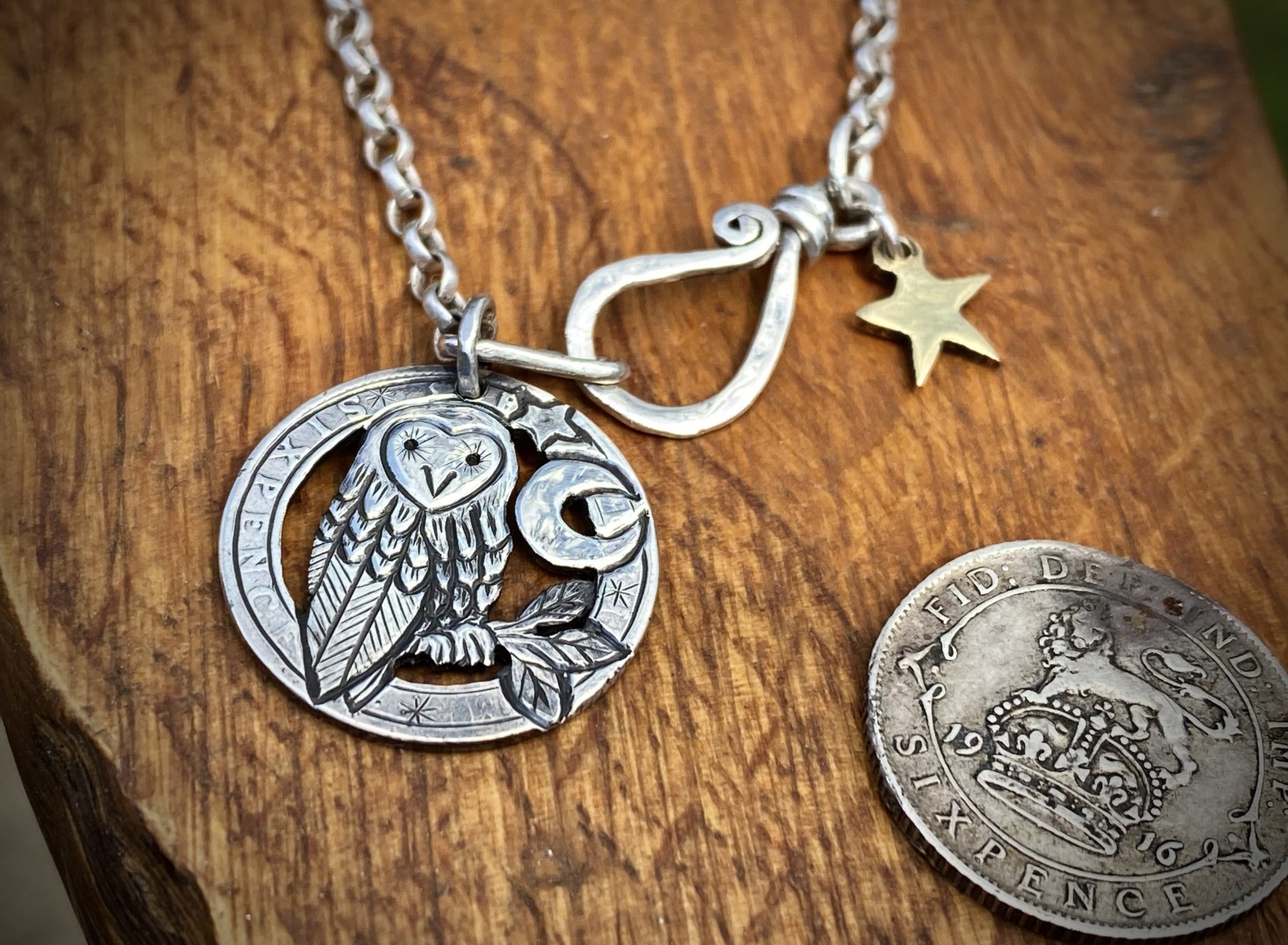
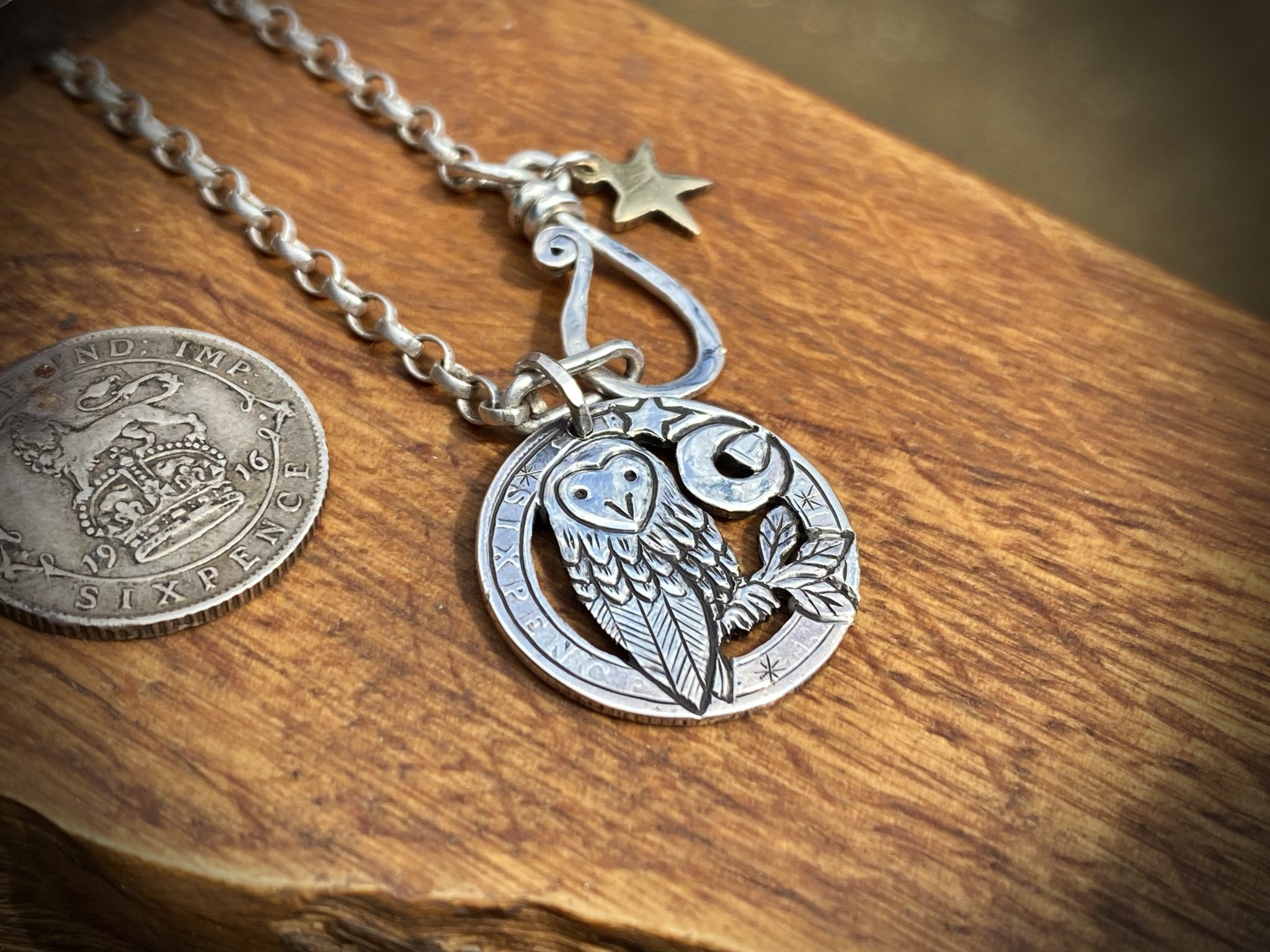
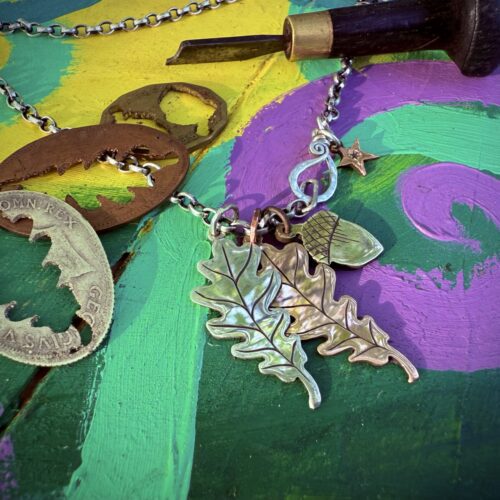
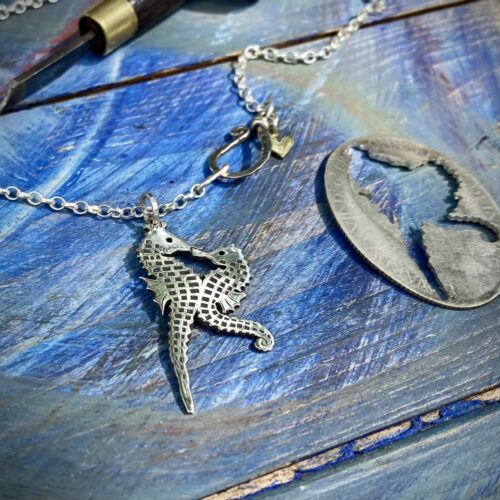
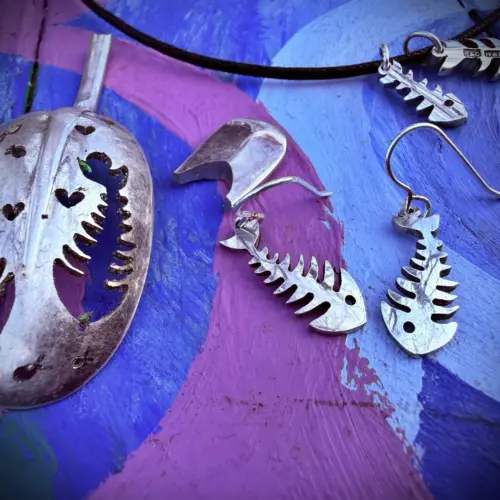
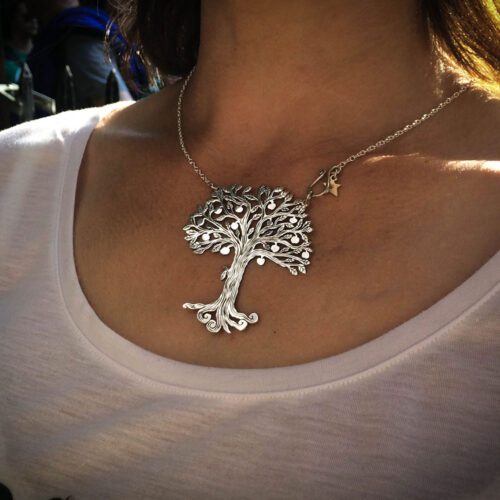
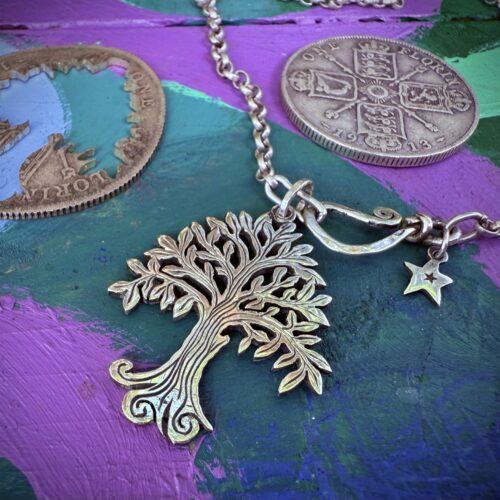
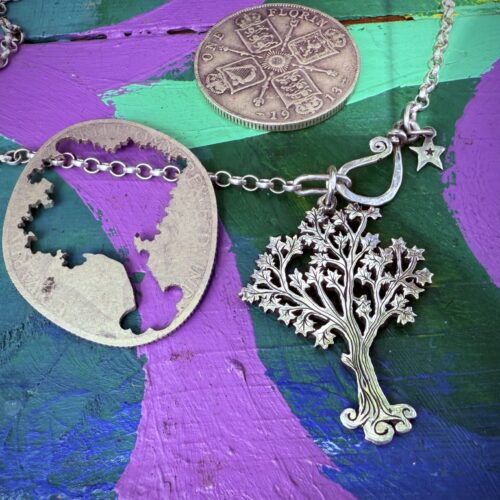
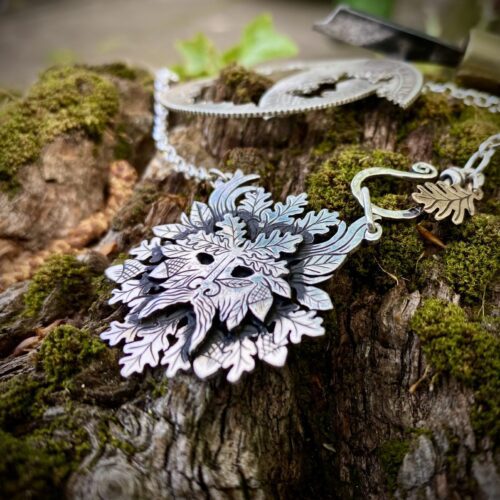
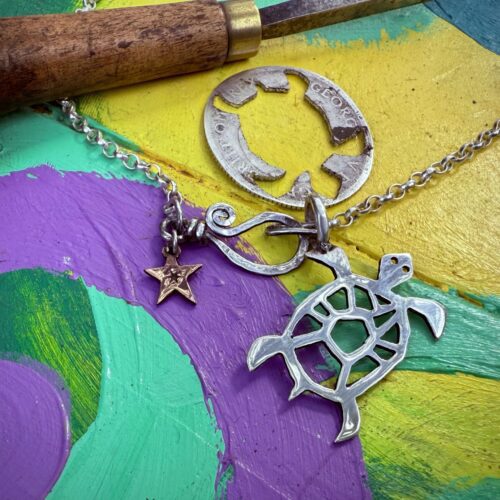
Each one of these pendants is handmade from an 100 year old silver sixpence coin. Using a marker pen a quick inspired sketch is dropped on to the surface of the lucky sixpence. I then meticulously carve away the design with a traditional hand engraving tool and cut details using a traditional jewellers saw. Once the details are cut the pendant is given an extremely bright polishing which really brings the coin to life. As I handcut each coin individually to order every one is completely unique and unusual. They look and feel special.
The barn owl, with its silent flight, ghostly appearance, and haunting screeches, has woven itself into the fabric of folklore and artistic expression, appearing across cultures as a potent and often contradictory symbol.
Mystery and the Unknown: The barn owl’s nocturnal habits and silent flight make it a creature of the shadows, evoking a sense of mystery, the hidden, and the unseen. It can represent the hidden aspects of the psyche or the deeper truths that lie beyond conscious awareness.
Wisdom and Intuition: Despite its association with darkness, owls, particularly the barn owl, are often linked to wisdom, knowledge, and intuition, according to Wild Gratitude. Their ability to navigate the darkness and locate prey based on sound alone can symbolize the power of inner knowing, trusting intuition, and finding clarity in challenging situations.
Death and Transformation: In some traditions, the barn owl’s ghostly appearance and association with the night have connected it with death and the underworld. However, this connection isn’t always negative. In some contexts, it can also signify transformation, regeneration, and the cycle of life and rebirth.
Protection and Guardianship: The barn owl’s silent hunt and its role as a nocturnal predator can be interpreted as a symbol of protection and guardianship, especially against hidden dangers in the dark.
Gwen Harwood’s acclaimed poem “Barn Owl,” for instance, uses the act of a child shooting a barn owl as a powerful symbol of the loss of innocence and the harsh realities of facing death and consequences. The owl’s silent flight and its eventual suffering highlight the vulnerability of nature in the face of human actions, and the irreversible nature of lost innocence.
The barn owl, therefore, is a creature that holds multiple, sometimes conflicting, layers of meaning in the realm of poetry and symbolism. It can inspire verses about:
The secrets of the night and the wisdom gleaned from silence. The transition between life and death and the transformative power of experience. The hidden dangers or unseen truths that require keen perception and intuition to navigate.
The sixpence itself…
Each pendant is carefully handcrafted to order, using only these recycled sterling silver sixpence coins. The coins themselves are the perfect medium for this beautiful design, inline with a love of nature using these coins is the perfect ethical and green solution. No new silver is destructively ‘mined’, rather, old, uncollectible coins are saved from the ‘melting pot’ so some of their history and story live on.
The lucky sixpence tradition, where the coin is given as a symbol of good luck, has its roots in British history, particularly in wedding and Christmas traditions. Introduced in 1551 during the reign of Edward VI, the sixpence was a circulating coin for centuries. Its association with good luck is linked to various customs, including placing it in a bride’s shoe or including it in a Christmas pudding. The lucky sixpence lore has been firmly establish through many of our traditions. These traditions are part of the soul of our culture.
Origins of the Sixpence as a Lucky Charm:
Wedding Tradition:It’s common for a sixpence to be placed in a bride’s shoe to wish her good fortune. This practice is thought to have originated in the early 1600s when the Lord of the Manor presented the coin as a wedding gift, and later, it became a customary dowry gift.
Christmas Pudding Tradition:Another tradition involves placing a sixpence in the Christmas pudding before it’s cooked. The person who finds the sixpence in their portion on Christmas Day is said to have good luck for the coming year. This tradition is believed to have started during Victorian times, specifically on the Sunday before Advent, known as “Stir Up Sunday,” according to The East India Company Collections.
Fairies and the Sixpence:Some folklore suggests that fairies would reward a tidy maid or housewife by leaving a sixpence in her shoe.
The Sixpence’s History as a Coin:The sixpence was first struck in 1551, during the reign of Edward VI, and was initially a silver coin. It was a popular coin in British pre-decimal coinage for over 400 years. It was demonetized in 1980, but its legacy as a lucky charm endures.
The sixpence’s journey from a circulating coin to a symbol of good luck is a testament to its enduring presence in British culture and tradition.
Once the wee barn owl design has been freehand sketched on to the coin it is carefully hand cut and carved using traditional hand saws, chisels and files. This traditional process allows me to have a close connection to each piece, ensuring the end result is personal and unique.






Michelle Gillespie –
<3 Barn Owls!
Barn owls are my favorite owls. Love this necklace! Absolutely stunning!!!
Neepster –
Stunning design and detail
This is one of my favourite designs – who can resist the heart-shaped face of an owl. Such beautiful detail in the feathers too, and all from a lucky sixpence.
Jason (verified owner) –
A very cute gift
I bought this for my mum’s anniversary. She picked it herself from the website. Mum loves all things relating to owls as she was born in Leeds and there are three owls on our city coat of arms. The detail is totally stunning and very precise and she is extremely happy with her gift. Thanks so much for making this Les!